




Welcome to Tangle — this is Senior Editor Will Kaback. We’re entering a dangerous period for my productivity. Football is in full swing, the MLB playoffs kicked off yesterday, and the NBA tip-off is less than a month away. Being a sports fan doesn’t lend much to my work covering U.S. politics, but at least I know that if I were ever part of a congressional hearing, I’d know the difference between the Atlanta Hawks and the Iowa Hawkeyes. Sorry, I couldn’t resist.
On a completely different note, our main topic today sits neatly at the intersection of health policy, Obamacare, and fraud. Last week, Vice President JD Vance announced the cancelation of hundreds of thousands of Obamacare enrollments he said were fraudulent or ineligible for coverage, a move that immediately drew backlash and scrutiny. Read on to learn more about what happened.
Later, a reader question about the White House national TV spot last weekend. It’s a 12-minute read.
Isaac Saul, Ari Weitzman, Audrey Moorehead, Carina Pacheco, Russell Nystrom, Isaac Wood, and Bailey Saul edited or contributed to today’s newsletter.

Weapons in space?
Earlier this month, Air Force Secretary Troy Meink made waves when he disclosed that the United States military currently has “space control weapons” in Earth’s orbit. Meink’s announcement instantly prompted questions about the nature of these space weapons — not to mention how they might be deployed. To learn more, Senior Editor Will Kaback sat down with aerospace defense expert Clayton Swope. You can listen to the interview here.
Quick hits.
- Former special counsel Jack Smith testified before the Senate Judiciary Committee on his investigations into President Donald Trump, reaffirming his stance that he collected sufficient evidence to prosecute the president. (The hearing)
- The Supreme Court agreed to hear arguments in a case challenging the Trump administration’s practice of deporting noncitizens to places different than their country of origin. The court allowed the administration to continue the third-country removals in the interim. (The case)
- The White House launched America.gov, an AI-powered website that centralizes information about government services. (The launch)
- Dutch police arrested a suspected member of the hacking group that accessed Federal Bureau of Investigation data. (The arrest)
- Defense Secretary Pete Hegseth will reportedly announce a 20% reduction in generals and admirals in an address at Marine Corps Base Quantico today. (The report)
4 ways to stop overpaying for the bills you can’t avoid.
Rent, utilities, insurance, groceries — some bills aren’t going anywhere. But that doesn’t mean you have to pay more than necessary. Our partner has rounded up four ways to potentially lower the cost of everyday expenses and tackle high-interest debt, from comparing insurance rates to exploring options for consolidating credit card balances.
Take a look at these simple ways to see where you could save.
Today’s topic.
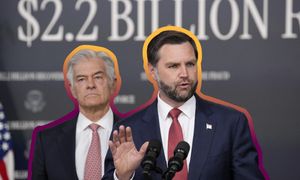
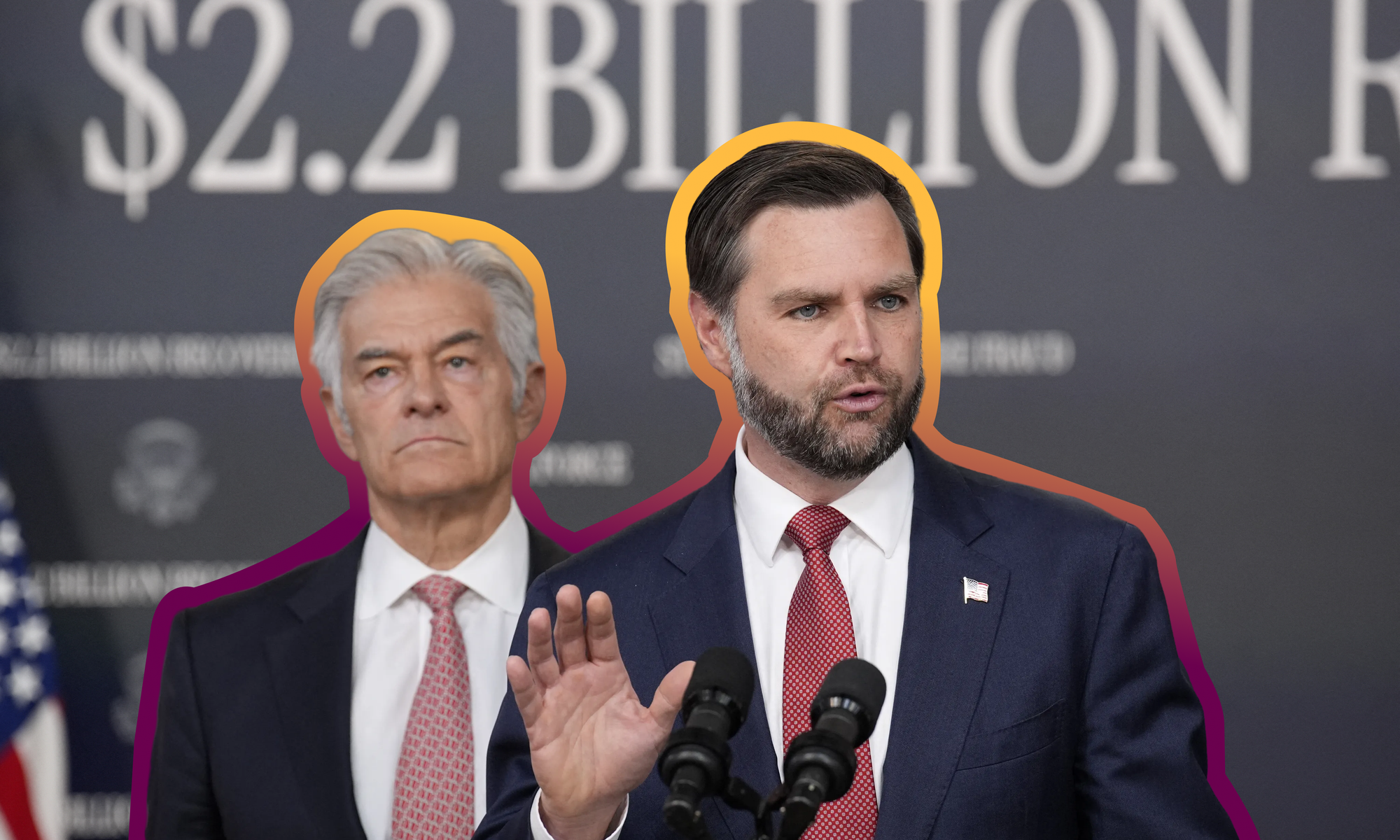
The ACA cancelations. Last Tuesday, September 22, the Centers for Medicare and Medicaid Services (CMS) said it had canceled healthcare enrollments for roughly 760,000 people under the Affordable Care Act (ACA) due to alleged fraud or improper documentation. In a press briefing announcing the cancelations, Vice President JD Vance and CMS Administrator Mehmet Oz said that Covid-era subsidies and relaxed verification under President Joe Biden led to rampant abuse of the federally regulated ACA marketplace. The vice president’s White House Task Force to Eliminate Fraud estimates the enforcement action will save $2.2 billion in taxpayer-funded subsidies.
Back up: In 2010, President Barack Obama signed the Patient Protection and Affordable Care Act (also known as “Obamacare”) into law. The ACA increased coverage and expanded Medicaid benefits for more people through government-regulated markets. In 2021, during President Joe Biden’s administration, Congress passed the American Rescue Plan, which offered premium subsidies and tax credits for those enrolling in the ACA. Then in 2022, Congress extended the enhanced subsidies through 2025 with the Inflation Reduction Act. Congress allowed those subsidies to expire at the end of 2025.
ACA enrollment increased from 11 million to 24 million people under the Biden administration. Oz alleged in March that as many as 5 million enrollees receive ACA benefits and subsidies fraudulently. Just over 19 million people received benefits through the federally managed exchange as of June 2026, meaning the enforcement action targeted roughly 4% of enrollees.
Those culled from the program were enrolled through third-party brokers, had zero-premium plans and lacked verifiable Social Security numbers or immigration status documents, leading the anti-fraud task force to suspect the beneficiaries were fraudulent. “We call them phantoms, because we believe most of them don’t exist or they had no idea they had coverage,” Oz said. Vice President Vance identified the role of brokers, who receive a payment for enrolling people in ACA programs, as key to the problem. “On the one hand, brokers are paid money to feed patients into the system, while on the other hand, the government isn’t even checking whether the people enrolled are actually eligible for the program,” Vance said.
Critics of the move argue that CMS cast too wide a net and could be removing coverage for many legitimate cases. “There is widespread agreement that unauthorized enrollments should be canceled,” Cynthia Cox, ACA researcher at health policy center KFF, said. “The question is whether these were all indeed unauthorized enrollments and whether this was the appropriate process for determining whether an enrollee was legitimate or not.”
Below, we’ll cover what the left and right are saying about the ACA cancelations, then Senior Editor Will Kaback gives his take.
|
What the left is saying.
|
In The Guardian, Melody Schreiber said “Trump is threatening the entire US health system.”
“No details were provided about how many enrollees were fictional, enrolled by fraudulent brokers without their knowledge, or expelled because of income restrictions,” Schreiber wrote. “The people were identified by three factors: they’d been enrolled by a broker or agent, had all of their ACA premium paid by the tax credit, and they had not supplied Social Security numbers or immigration documents.”
“About 35% of ACA enrollees have never used their health insurance, [said Medicare and Medicaid Administrator Mehmet Oz],” Schreiber said. “But it’s not unusual for healthy people to be enrolled in insurance and not need to use it, [according to public policy researcher Edwin Park]… By removing lower-risk enrollees, insurance premiums could increase or insurers could decide to leave markets entirely, he said… When people lose their health insurance, it has ripple effects — including added pressure on health systems that affect all patients.”
In MS NOW, Steve Benen wrote about what “Vance’s task force has in common with Musk’s DOGE gambit.”
“Independent estimates show billions of dollars are lost every year to fraud and abuse. If the vice president believes he can help address the problem, more power to him,” Benen said. “The trouble is, Vance claims he has already made extraordinary headway in uncovering fraud — to the tune of more than $260 billion — but those boasts aren’t standing up well to scrutiny. If this sounds at all familiar, it’s because a similar story unfolded last year.
“Elon Musk was put in charge of… DOGE, and it too created an online resource that purported to show all of the billions of dollars the endeavor was saving American taxpayers,” Benen wrote. “To be sure, the underlying point of these resources sounds great… The trouble is, both initiatives seemed wholly unprepared for what might happen when people who know what they’re talking about bothered to review their work.”
In MS NOW, Miranda Yaver suggested “a heavy dose of skepticism.”
“The first Trump administration helped empower the very brokers it now claims are fraudulently enrolling people,” Yaver wrote. “While the second Trump administration is taking aim at perverse incentives that may have arisen, sweeping disenrollments ignore the failures of policy design. That is, when the previous Trump administration gave brokers more power as intermediaries… the government failed to build a regulatory regime that would police their behavior.”
“CMS’s decision to impose a moratorium on new agents and brokers may prove to be a Band-Aid solution,” Yaver said. “An appropriate response would not just penalize actors who are in the wrong (such as this) but also impose greater regulatory protection to prevent this in the future. The Trump administration, ideologically inclined against consumer protection, has largely opted for piecemeal responses… while leaving systemic failures in place.”
|
What the right is saying.
|
In The Federalist, Chris Bray said the administration is “doing normal anti-fraud work with increased focus.”
“Federal regulations that were first written during the Obama administration in 2012 explicitly describe the process by which fraudulent Obamacare enrollments can be terminated by government officials, and here’s the funny part: Every administration does this. The termination of fraudulent Obamacare enrollments is a normal CMS activity,” Bray wrote. “The Biden administration routinely announced the termination of fraudulent Obamacare enrollments.”
“By the standard Democrats are applying this week, cruel Joe Biden viciously stripped healthcare coverage from tens of thousands of Americans,” Bray said. “But not really, because the whole fake panic is completely made-up and stupid. The Trump administration is doing normal anti-fraud work with increased focus and seriousness, which is only a scandal if you’re dumb enough to be elected to Congress as a Democrat.”
The Las Vegas Review-Journal editorial board suggested fraud “shouldn’t be a partisan issue.”
“Just because a government agency allocates money for a noble-sounding cause doesn’t mean the money is well spent. Elected officials and government employees have a duty to ensure that taxpayer money is spent carefully,” the board said. “Politicians from both parties talk about the need to eliminate ‘waste, fraud and abuse.’ But notice the reaction to the Trump administration’s efforts to actually do just that.”
“The DOJ alleges that ‘more than $10 million intended to help low-income families pay for childcare was instead funneled to bogus daycare providers,’” the board wrote. “Yes, this White House has a tendency to exaggerate for political purposes. But fraud against the taxpayers is a serious problem… Democrats should work with the Trump administration to root out fraud, not attack Mr. Trump and Mr. Vance when they work to do so.”
The Washington Post editorial board argued “JD Vance is not ripping away anyone’s health insurance coverage.”
“Former House speaker Nancy Pelosi (D-CA) wrote on social media that ‘using the false pretext of fighting fraud to strip Americans of their healthcare is as cynical as it is cruel.’ Except that’s not what’s happening,” the board wrote. “Even if the account met all of [the] requirements [for removal], the insurer was still required to reach out to the individual via two forms of communication. Only when insurers received no response after 30 days was the account removed, according to CMS.”
“Fraud grew rampant in recent years because the Biden administration increased Obamacare enrollment by expanding eligibility for zero-premium plans while failing to perform sufficient due diligence,” the board said. “Money given to scammers is money that doesn’t help needy people receive health care. Democrats should wholeheartedly support throwing the book at these criminals. Downplaying the scale of abuse undermines public confidence in the safety net.”
|
||||
|
||||
|
Reminder: This is where we share a personal opinion. If you have feedback, criticism or compliments, leave a comment or reply to this email.
|

“Trump Officials Eject 750,000 From Obamacare Markets, Claiming Fraud,” is one of those headlines that rolls down the conveyor belt of daily news items and snatches your attention, particularly if you or a loved one are enrolled in a government healthcare plan. It’s also a story that could create more confusion than clarity. So let’s nail down a few key points up front.
All enrollees whose coverage was canceled received their health insurance through the federally facilitated Affordable Care Act (ACA) Marketplace — HealthCare.gov — so those insured through state-based exchanges weren’t affected. Neither were those who signed up for a plan on their own. Vice President Vance’s task force only looked into enrollments mediated by agents or brokers, who serve as middlemen between the government, insurance companies, and individuals.
In theory, brokers have a useful role: They identify people eligible for ACA benefits and help them get health insurance (they’re then paid on commission by insurers). But these agents have also become a burgeoning source of fraud. The Centers for Medicare & Medicaid Services (CMS) found that first-time brokers who registered for the 2026 plan year were disproportionately responsible for enrollment activity flagged as high-risk or fraudulent, including missing Social Security Numbers, unverifiable citizenship status, and unresolved income verification.
Those discrepancies may be explainable, but unverified information like that is an alarm bell that brokers may be enrolling people without their knowledge and lying about their income so they qualify for a $0 premium (and thus wouldn’t know they had been signed up). Or they could be switching people to a different plan without their knowledge to collect a new commission. Or they could be fudging personal data to make someone eligible who shouldn’t have been. Concerns over this behavior are bipartisan: In 2024, Sen. Ron Wyden (D-OR) called on CMS to take urgent action to address brokers fraudulently enrolling people in ACA plans.
Beyond bad broker behavior, other areas of the HealthCare.gov marketplace have become hotspots for fraud. In 2024, the Government Accountability Office (GAO) tested whether four made-up applicants could get approved for coverage — all four were accepted, at a total cost of $2,350 per month. For 2025, it created 20 fake applicants, and 18 were still receiving coverage nine months into the plan year, at a cost of over $10,000 per month. GAO also found 30,000 applications in plan year 2023 and 160,000 applications in plan year 2024 that had “likely unauthorized changes by agents or brokers.”
Separately, the Congressional Budget Office informed lawmakers in August 2025 that an estimated 2.3 million enrollees intentionally misrepresented their income to qualify for ACA tax credits in 2025, up from an estimated 1.3 million in 2023. And the Office of the Assistant Secretary for Planning and Evaluation reported in June that nearly half of ACA enrollment growth between 2021 and 2024 was “suspected to be improper, phantom, or fraudulent.”
Considering the range and scope of these findings, it feels pretty disingenuous for Democratic politicians like Sen. Chuck Schumer and Rep. Nancy Pelosi to suggest that the Trump administration is villainously trying to rip health insurance away from hundreds of thousands of people for no apparent reason. Some people may have been mistakenly caught up in this probe, but we don’t have enough information to say that yet (and one week after this announcement, I haven’t seen any reports of people claiming they were wrongly kicked off their plan). Based on what we know right now, I think this effort was both justified and properly executed.
When I reviewed criticisms from the left about the cancelations, I noticed the arguments were mostly based on suspicion of any fraud-related initiatives from the Trump administration. Take the three pieces we chose for today’s edition. In MS NOW, Miranda Yaver wrote, “Given the administration’s track record, there are reasons to view this announcement with a heavy dose of skepticism.” Also in MS NOW, Steve Benen alluded to “ample reason for skepticism” about Vance’s fraud task force. And The Guardian’s Melody Schreiber dedicated the bulk of her piece to quoting experts who suggested ill intent by Vance and co.
What also struck me, though, was that these articles didn’t offer evidence that the enrollments were improperly canceled — just that CMS may have made some mistakes, and the Trump administration doesn’t deserve the benefit of the doubt.
I think both those points have some credence, especially when the administration has misled the public about so many other “anti-fraud” initiatives. As Isaac documented in his retrospective on DOGE last month, Elon Musk’s ill-fated effort enacted sweeping cuts with no apparent strategy, lied about its savings, and likely cost taxpayers billions. Vance’s fraud task force has also made dubious claims; the vice president has said his group has found roughly $250 billion in fraud, but they haven’t shared the basis for that number publicly (a New York Times analysis found that Vance included cases that were identified and prosecuted under the Biden administration).
Vance and CMS could have headed off this skepticism by offering more detail about those who were kicked off their plans. Specifically, knowing what proportion of the cancelations were for suspected broker fraud, ineligibility, or improper documentation would give a clearer idea of where the biggest areas of concern exist.
However, acknowledging those points doesn’t invalidate this anti-fraud initiative. Remember, the affected enrollments met four criteria: They lacked a valid Social Security or immigration identification number, had 100% of their premium covered by tax credits, hadn’t used their coverage since it was activated, and had never made contact with the insurer. To me, that’s a sharp approach to rooting out the areas of concern for fraud. Even after all four boxes were checked, the insurer of the suspicious plan still had to reach out to the enrollee through two different forms of communication and give them 30 days to respond before the government canceled their coverage, providing ample opportunity to correct a mistake. And if their plan was canceled improperly, individuals can still re-enroll.
I don’t blame anyone whose eyebrow twitched when they first read about the ACA cancelations. I had the same reaction. But knowing the scale of the issues that have long existed in the ACA marketplace, I’m glad the administration took action, and I think the criteria it used were sound. Am I still skeptical of how the White House is addressing purported fraud in other areas of government? Absolutely. Do I think Vance’s task force is scrutinizing Obamacare with entirely pure intentions? I don’t. But I can hold those reservations and still find this effort necessary and valid.
Take the survey: Do you support this action? Let us know.
Disagree? That’s okay. Our opinion is just one of many. Write in and let us know why, and we’ll consider publishing your feedback.
Your questions, answered.
What’s the deal with these “US government-funded” (aka taxpayer-funded) Trump ads? Is that legal? Should we be worried about this?
— Eliza from Burlington, VT
Associate Editor Carina Pacheco: Over the weekend, the Trump administration aired a video on national TV in which Trump vows to tackle the “sick political class that hates our country” and “demolish the deep state.” As you noted, the dramatic black-and-white commercial named “Final Battle” was stamped “Paid for by the U.S. government.” NBC News found that the advertisement is virtually identical to a campaign ad Trump posted to Truth Social back in 2024.
The rhetoric isn’t uncommon for Trump, nor is it uncommon for presidential administrations to run Public Service Announcements (PSAs) for policy initiatives, but it is uncommon (and potentially unprecedented) for an administration to use taxpayer funds for an advertisement that so closely resembles a campaign sizzle reel. The Associated Press reported that the Department of Homeland Security (DHS) appropriated about $20 million from Customs and Border Protection’s budget to pay for the TV spots.
The administration has faced bipartisan backlash. Trump-allied Republican senators object to the use of public dollars for apparent promotional materials, while Democrats equate the ad to government-sponsored pro-Trump propaganda and allege that the commercials violate anti-propaganda laws and the Hatch Act, a 1939 law that limits the partisan political activities by the executive branch.
The White House has defended the ads as PSAs that promote the president’s policy achievements, and it rebutted the claim that the video is campaign material by saying Trump is not on the ballot and the ad does not include a “call to action.” The administration also highlighted PSAs by past presidents, such as the Obama administration running national ads to promote the Affordable Care Act’s open enrollment period or the Biden administration issuing notices about Covid-19.
The Trump administration certainly seems to be intentionally blurring the line between campaign advertising and public awareness initiatives. While the actual content of the advertisement will make it difficult to peg it as partisan political material (the voiceover never explicitly refers to either political party or candidates), the fact that the exact same video was previously used for campaign purposes muddies those waters. And while it doesn’t contain a “call to action,” the TV spot doesn’t appear to have a clear “public service” purpose, either.
No full-fledged lawsuits have been brought as of this writing, but the artist of the song featured in the ad has sent a cease-and-desist, and consumer advocate non-profit Public Citizen has filed complaints with regulatory bodies.
Want to have a question answered in the newsletter? You can reply to this email (it goes straight to our inbox) or fill out this form.
Save money on mandatory bills.
Some bills are simply part of life, but that doesn’t mean you have to overpay for them. Our partner shares practical ways to potentially lower the cost of everyday expenses, from insurance and credit cards to other recurring bills.
Take a closer look at what you’re paying and see where you may be able to cut costs. Even small changes can add up over time.
The extras.
- One year ago today we covered the shootings in Grand Blanc, Michigan, and Dallas, Texas.
- The most clicked link in our last regular newsletter was the political ideology quiz.
- Nothing to do with politics: We have a Fat Bear Week winner.
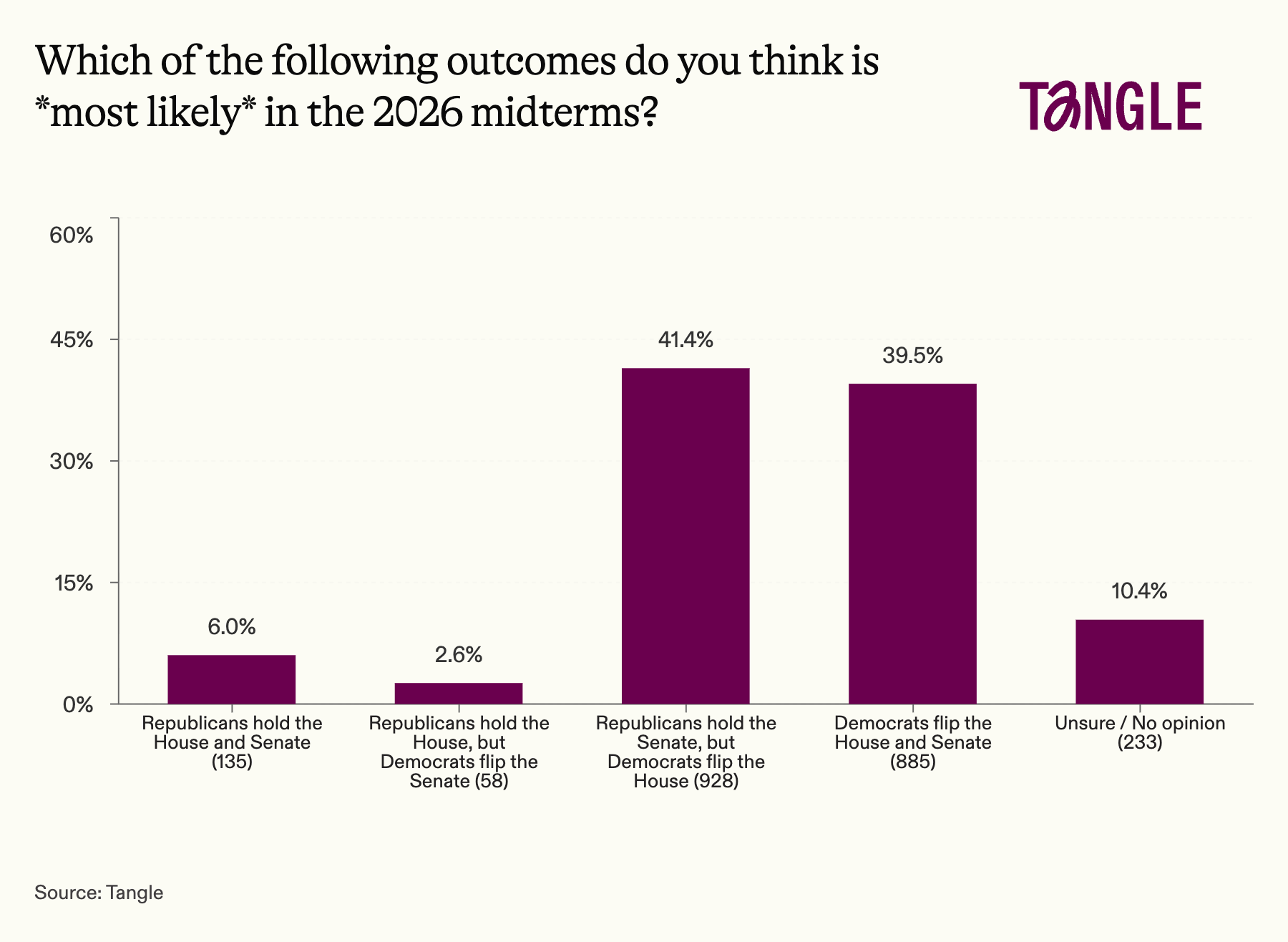
- Our last survey: 2,239 readers responded to our survey on 2026 midterms, with 41% saying they think Republicans will hold the Senate but Democrats will flip the House. “Republicans are relying on voters not being completely fed up with rising gas prices and new wars. Seems like an easy win for Democrats,” one respondent said. “Democrats won’t win as many seats as they hope. Much blame will be on [the] Democratic Socialists,” said another.
Have a nice day.
The black robin is a tiny bird found in the lowland forests of New Zealand’s Chatham Islands. In the 1970s, after habitat loss and pest introduction, the bird neared extinction, with just a single breeding pair left. But a pioneering breeding program that used other species to foster eggs proved successful, and the species’ population has climbed back to 350 birds. This year, the black robin won New Zealand’s Bird of the Year competition. The Guardian has the story.

Member comments