












 500,000+ readers just today.





Trump names Stephen Miller chief of staff.
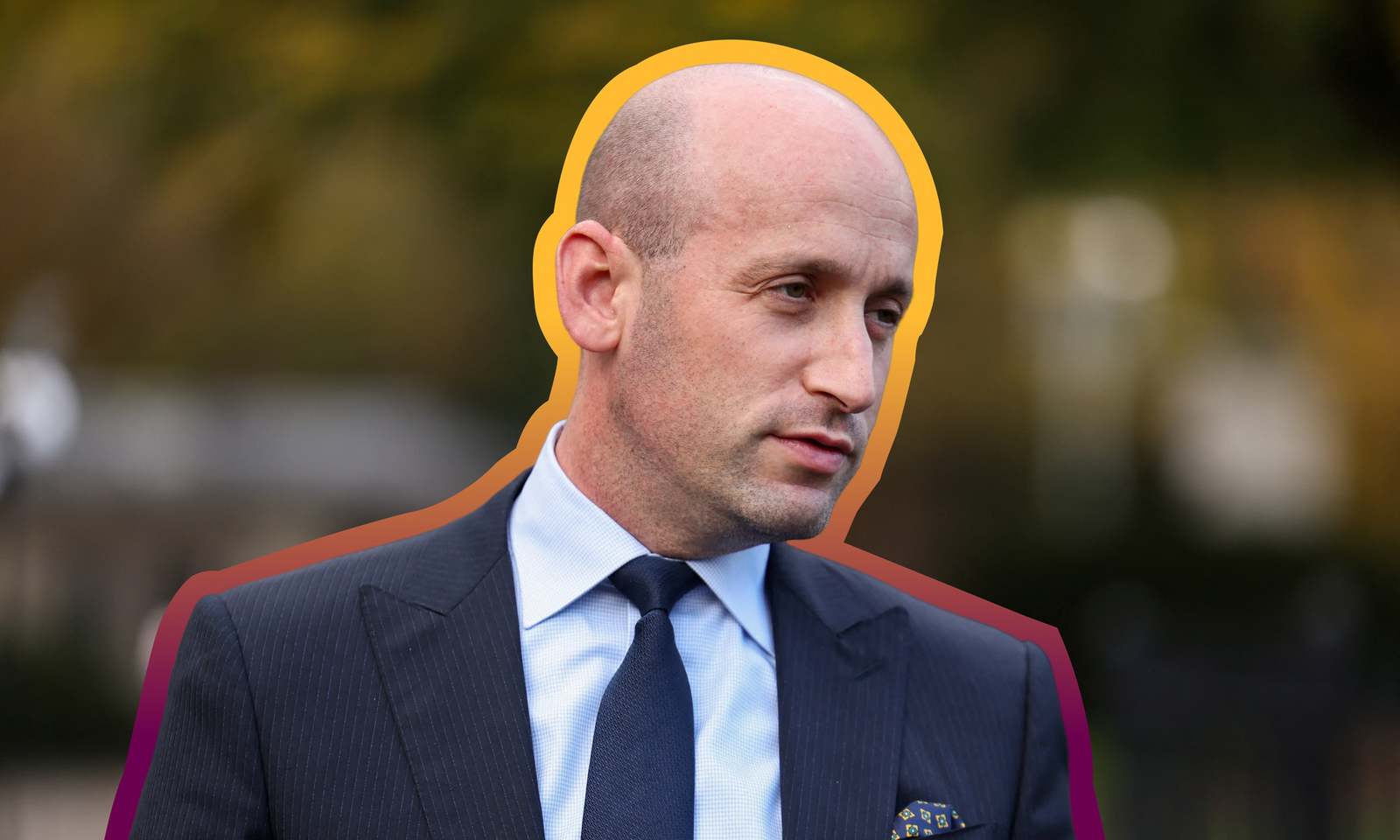
Happy Monday, Tanglers. This is Associate Editor Carina Pacheco, and today we’re covering a promotion that was not on my bingo card. As a Washington, D.C. resident, I’ve already heard tons of chatter about Stephen Miller’s promotion to White House chief of staff, but I’d love to have been a fly on the wall in the Oval Office or the halls of Congress to get an unfiltered reaction to the move. Drama! Stick with us to unpack the promotion’s implications.
Later on, a reader question about whether Democrats ran “decent” campaigns in the midterms, and a purr-fect story about making sure cats get to use all nine of their lives. Plus, let us know your thoughts on a new survey tool we’re launching today.
It’s a 13-minute read.

Isaac Saul, Will Kaback, Audrey Moorehead, Russell Nystrom, Isaac Wood, and Bailey Saul edited or contributed to today’s newsletter.
A midterms mailbag.
On Friday, the Tangle staff tackled an array of frequently asked questions following last Tuesday’s midterm elections. Topics included the National Popular Vote Interstate Compact, key ballot initiatives across the country, Congressional Democrats’ agenda for the next two years, and the impact of gerrymandering. Check it out here.
Quick hits.
- President Trump said he offered Ultimate Fighting Championship CEO Dana White the White House press secretary role. White reportedly declined the offer, and Trump later said he was “kidding.” (The offer) Separately, Assistant Attorney General Harmeet Dhillon announced her resignation as head of the Justice Department's Civil Rights Division. (The resignation)
- The Bureau of Labor Statistics reported that nonfarm payroll employment rose by 165,000 in October, while the unemployment rate fell slightly to 4.1%. Employment totals for August and September were also revised upward by 53,000 and 31,000, respectively. (The numbers)
- AI chipmaker Nvidia announced an internal investigation into its CEO, Jensen Huang, after he admitted to an affair with a woman believed to be a Chinese spy. (The investigation)
- Israeli President Isaac Herzog formally tasked Yashar party leader Gadi Eisenkot with forming a new government in Israel. (The task)
- A gunman killed six people and wounded over a dozen others in a mass shooting in Krakow, Poland. (The shooting)
If you’ve got more than 1k in your checking account, make these 8 money moves
You’ve done it. You’ve built a little cushion in your bank account, and that feels good, doesn’t it? Those days of anxiously checking your balance and wondering if you’ll make it to payday are behind you. Congratulations!
You’re building a solid financial foundation, and now it’s time to think about what comes next. What are your longer-term goals? Do you want to grow your savings, buy a home, start investing, or finally tackle another financial milestone?
Whatever your next goal looks like, there are plenty of ways to keep the momentum going. Here are 8 money moves worth considering to take the next step.
Today’s topic.
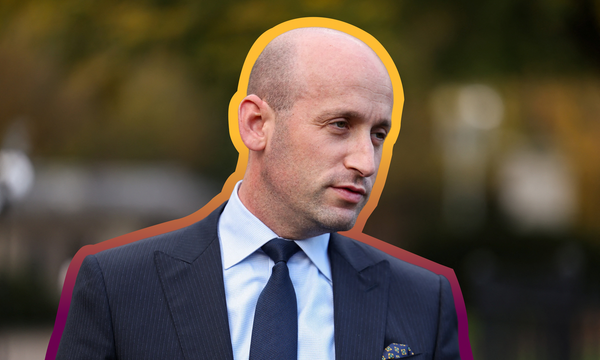
Stephen Miller as chief of staff. On Friday, President Donald Trump announced he is elevating Stephen Miller to be his new chief of staff, while current Chief of Staff Susie Wiles will move to a position in the “Trump Political Operation.” The move is one of the White House’s first major personnel changes following last week’s midterm elections.
Back up: Miller, 41, previously served as a deputy chief of staff in the second Trump administration, focusing primarily on the president’s mass deportation effort, anti-fraud initiatives, and military operations against alleged drug traffickers. He has been a top adviser to Trump since his first administration and earned a reputation for hard-line immigration views.
Wiles reportedly resigned on Thursday. She managed President Trump’s 2024 campaign and is his longest-serving White House chief of staff across his two administrations. In a statement, she said serving as chief of staff was “the honor of a lifetime.”
As the architect of the White House’s immigration policy, Miller has set aggressive goals for deportations and sought to leverage executive authority to expedite removals of alleged noncitizens. Those efforts have drawn a litany of legal challenges and some rulings restraining the administration’s actions.
On X, Miller said, “I am honored beyond words to serve as [Trump’s] White House Chief of Staff,” adding, “The mission now is more clear than ever: Fight with all of our soul to support our President and defend this magnificent Republic.”
Some Republicans praised the move, including House Freedom Caucus Chair Andy Harris (R-MD), who said, “Stephen Miller has built a proven record focused on securing our border, combating crime, and advancing a now much-needed common-sense conservative agenda for our country.” Others questioned the decision; outgoing Sen. Thom Tillis (R-NC) called it “a colossal mistake” after Republicans’ midterm losses.
Democrats criticized Miller’s promotion; Rep. Robert Garcia (D-CA), the incoming chair of the House Oversight Committee, said, “Miller is the architect of the unconstitutional ICE raids that have terrorized our communities and kidnapped and killed American citizens and immigrant families. Oversight Democrats will continue to investigate Miller for his misconduct.”
Below are views from the left and right on the pick. Then, Associate Editor Carina Pacheco’s take.
|
What the left is saying.
|
In Slate, Ian Prasad Philbrick asked “did Trump learn anything from the midterms?”
“It isn’t unusual for presidents to reshuffle the org chart after a midterm drubbing. But those personnel changes are usually a tacit admission that something has gone wrong, a public hitting of the reset button,” Philbrick wrote. “[Trump] has never cared much for the will of the voters. And promoting Miller, who is among the administration’s most despised figures, is the opposite of what most presidents would do after an overwhelming electoral beatdown.”
“Promoting Miller starts to make more sense when you consider who Trump is at his core: a confrontational man who managed to get elected president twice in large part by stoking divisions over immigration,” Philbrick said. “Ever in search of a scapegoat for his own failures, Trump has reportedly blamed Republicans’ hefty midterm losses on Susie Wiles… And rather than confront the reality of defeat, Trump appears to be seeking succor among his core supporters.”
In New York Magazine, Ed Kilgore called Miller’s promotion “a chilling sign for [the] final Trump years.”
“Putting Miller into her place is a pretty clear signal of defiance to Democrats, to Republicans who wanted a change of direction, and to the electorate,” Kilgore wrote. “Miller is deeply responsible for losing 2024 Trump voters who supported border control and deportation of violent criminals but never bargained for the terror ICE has inflicted on immigrant communities or the unapologetic racism that underlies Miller’s approach to immigration.
“And that may be the scariest thing of all about his new base of power: He has two more years to act on his deep belief in the Great Replacement Theory. This is the idea that traitorous liberals are deliberately destroying the country through a conspiracy to drown native white Americans in a sea of shiftless immigrants who trade illegal votes for welfare benefits and the opportunity to commit crimes,” Kilgore said. “Trump talks about this nightmare scenario all the time as part of his demagogic pitch to the MAGA base. But for Miller, it’s an article of faith.”
In Bloomberg, Erika D. Smith argued “Stephen Miller is not what voters asked for.”
“Trump has obviously learned nothing from the worst political shellacking in a half-century. Promoting Miller is the clearest sign yet that the president plans to approach his last two years in office much like his first two — pursuing deeply unpopular policies, regardless of what most voters want,” Smith wrote. “Trump wanted a chief of staff who ‘will crack skulls,’ as a source familiar with the decision told the Atlantic, because he ‘doesn’t want to be reined in.’ Republicans, just for their own political survival, would be foolish to go along with that.”
“Republicans might be tempted to shrug this off, figuring that voters care more about high prices for gas, groceries and housing than they do about immigrants being hauled away by federal agents,” Smith said. “But that doesn’t mean voters don’t care about immigration. Or that Miller’s style of hardline enforcement won’t undermine their support for the Republican Party.”
|
What the right is saying.
|
The New York Post editorial board wrote “Trump goes to the mattresses with Stephen Miller.”
“[Wiles] was crucial to President Donald Trump’s return to the Oval Office and the excellent start to his second term. You could not ask for a more loyal gatekeeper — one dedicated to forwarding Trump’s core agenda without pride or prejudice — nor a hand more deft at balancing attack and defense, conflict and cooperation,” the board said. “News that she’ll be replaced by Stephen Miller removes almost all hope that the nation’s partisan warfare will ease after the elections.”
“The president is circling the wagons in a way that’s likely to leave a lot of potential allies on the outside. It also signals that Trump has decided that he wants to appeal to his shrinking base, rather than attempt to rebuild the wider coalition that swept him to power but soundly rejected him and his party this week,” the board wrote. “The coming spectacle will be more bloody than a cage fight on the White House lawn.”
In RedState, Brandon Morse called Miller “a wartime consigliere.”
“The Left hope[d] the Republicans put up a well-informed, professional-sounding, and ultimately boring guy. Miller is not that,” Morse said. “Miller has the ability to give info and make it look like fireworks are going off. You enjoy watching him beat people over the head with facts. He’s on the offensive and knows how to make a jab sound professional… If Trump is going to keep his administration going as strongly as he can, he’s going to need to bring these kinds of people to the forefront.
“[Trump] is at war. To be clear, he always has been, but after the midterms, he’s now on the losing side. His PR isn’t exactly going well, so he needs competent fighters. I think Miller absolutely qualifies as one of the best,” Morse wrote. “The more [Miller is] in front of a camera the more defensively the Left has to play, and the more defense they have, the better it looks for Republicans.”
In National Review, Mark Antonio Wright argued “Miller will double down on Trumpism.”
“Miller’s extreme performative combativeness — even when defending what should be defensible policy positions — is not always helpful to the administration he serves,” Wright said. “He usually comes off indignant, heated, and like he’s trying to win a debating point in whatever the argument is of that moment; there seems to be little thought to strategically advancing the ball down the field more generally.”
“Expect Stephen Miller to double down on Trumpism. That may or may not bring the Trump administration wins on policy. It may or may not be an effective strategy to delay, distract, and defuse Democratic congressional investigations into the administration’s actions and potential corruption,” Wright wrote. “But just don’t expect the Trump administration’s actions under Miller’s influence to suddenly become politically popular. The track record, in fact, points to the opposite as the most likely outcome.”

- Trump is rewarding Miller despite Miller’s responsibility for the policies that have made Republicans so unpopular.
- His promotion expedites the fracturing of the GOP.
- Trump wants a loyal fighter in his corner, but Miller will exacerbate the issues that led to the midterm losses.
More than anything else, last week’s “blue tsunami” was a rejection of the second Trump administration. Afterward, the president took a surprisingly chastened tone — he said he’s open to working with Democrats and doesn’t want to spend his final two years in office vetoing everything a Democratic Congress passes. Sure, he’s dabbled in election fraud claims and seems unwilling to reckon with the role he played in his party’s midterm defeat. But overall, his immediate response was muted.
Appointing Stephen Miller as chief of staff, though, hits a completely different note.
Politico reported that some Republicans shared my reaction to the news, writing: “One House Republican, when informed that Trump had named Miller his chief of staff, replied: ‘Please tell me you’re lying to me right now, just to get a reaction.’” This unnamed official is not alone in their distress at the appointment; Republicans are trying to discern what a Trump-less future looks like, and Miller’s promotion complicates that picture. It all but ensures that some of the most polarizing policies of Trump’s tenure will continue to be center stage in his final years in office.
As the New York Post editorial board said (in “What the right is saying”), Trump is circling the wagons around the policies that cost Republicans control of Congress; and, in my view, he’s expediting the fracturing of the party. For all the handwringing about whether or not Trumpism or MAGA is dead, Miller is the guy fighting tooth and nail to keep it alive.
Miller has been building up to this moment since his youth. As a teenager, he played provocateur on Larry Elder’s radio show by complaining about the left-wing culture of his Santa Monica high school and the rising prominence of political correctness. While at Duke University, Miller spoke out against what he viewed as left-wing institutional bias, explored polarizing topics in his opinion column in The Duke Chronicle, and backed the defendants in the 2006 Duke lacrosse scandal, who he believed were presumed guilty due to their race and socioeconomic status (the case fell apart, and he was vindicated). Since he was a young man, Miller has reveled in any opportunity to wade into the culture wars.
Wall Street Journal editor Zachary Kessel observed that if Susie Wiles represented the restrained version of Trump, Miller is maximalist Trump. Politically, he is synonymous with aggressive immigration policies and appears to relish his role as a zealous firebrand promoting the right’s more extreme political positions. Miller goes much further than many in his party with vitriolic nativist rhetoric. He embodies the cognitive dissonance of “America is for Americans and Americans only” — the United States, after all, is a country unique for its history of immigration and the belief that, in President Ronald Reagan’s words, “anyone, from any corner of the Earth, can come to live in America and become an American.” Miller himself is the descendant of not-so-distant Jewish ancestors.
Yet his worldview centers on threats of foreign “invasion,” the dangers of multiculturalism, and economic challenges created by immigration. While some conservatives and moderates may share these concerns in broad strokes — for example, opposition to open borders and an interest in cultural assimilation — Miller’s existential, militaristic messaging clearly doesn’t resonate.
In his heart of hearts, I think Miller truly believes extremely limited immigration is the most straightforward way to protect American laws, values and traditions, and that being called a racist and xenophobe is a small price for him to pay in his larger mission. While voters may have appreciated some of those positions in theory, they have now starkly rejected them in practice.
It was Miller’s idea to set daily apprehension quotas and expand enforcement operations for Immigration and Customs Enforcement (ICE). It was his idea to restrict H-1B visas for high-skill foreign workers. It was his idea to aggressively target anyone in the country illegally, not just those with criminal records. It was his idea to invoke the Alien Enemies Act of 1798 to speed up deportations of alleged foreign gang members. It was his idea to curtail birthright citizenship via executive order.
While Miller isn’t personally to blame for the war in Iran, inflation, tariffs and Trump family corruption, he is the architect and defender of the kind of hard-line policies voters resoundingly rejected on Tuesday. Trump’s approval rating on immigration, usually his strongest issue, has fallen considerably. Latinos, who secured Trump’s 2024 victory, moved sharply to the left. Even in the border state stronghold of Texas, voters chose a Democrat for both Senator and Governor. Miller-backed Texas railroad commissioner candidate Bo French, who ran on anti-DEI and anti-immigration, also lost his race to a Democrat. All that to say — Trump rewarding Miller with a promotion is either incredibly hubristic, incredibly shortsighted, or both.
The president seems well aware of why his party got wiped out on Tuesday, and even well aware of the reality that his tough-on-immigration policy hurt him with many voters. He seems preoccupied with cementing his own legacy via construction projects and completely unconcerned by how Republicans will position themselves in 2028. In a 60 Minutes interview that aired last night, the president acknowledged that backlash against his hardline immigration policies contributed to his party’s midterm losses. He even floated the possibility of his steering clear of the 2028 Republican presidential contest, saying, “Maybe I’m better off not getting involved.” So perhaps Miller’s elevation is more of a personal calculation than a political one: a reward for a decade of loyalty and an opportunity to delegate day-to-day decisions to someone he trusts.
Also likely, though, is that Trump wants Miller to keep the base energized and execute his agenda while embodying a take-no-prisoners attitude against a combative Democratic Congress and some very skeptical Republicans. Trump understands that Miller’s views are extreme, but I think he believes someone in this mold will be his best defense against incoming investigations.
Promoting Miller creates an intricate mess for the would-be successors of Trump’s movement, and picks a side in a fight Republicans would probably rather avoid. The MAGA coalition is fracturing in real time on the issues that will partially define the 2028 election — legal immigration versus no immigration, interventionism versus isolationism, and economic populism versus limited government among them. Miller sits at the far end of those divides, and every Republican eyeing 2028 will have to decide whether to stand with him or against him.
Trump can talk about working with Democrats all he likes, but feigning a placatory tone is easy. Choosing to double down on Miller as a prominent voice in his administration is much more complicated and suggests Trump isn’t really as coy about the next two years as he’s letting on; the question is whether his party will pay for it in 2028.
|
||||
|

Disagree? That’s okay. Our opinion is just one of many. Write in and let us know why, and we’ll consider publishing your feedback.
A note on today’s survey.
As we shared back in March, we’ve spent this year internally auditing every facet of the newsletter and incorporating changes we think will make it better. We’ve used the same basic survey tool for several years, and we’re now going to experiment with a new survey provider, which you’ll see below.
This new service offers live, real-time results, which allows you to see the vote totals immediately after voting — then come back to them and see how they’ve changed. We hope this will make the survey experience more engaging. We’ll still share a link to the previous edition’s results in the Monday–Thursday newsletter, as well as a few written responses from readers. Let us know what you think!
Take the survey: What do you think of Stephen Miller as chief of staff? Let us know.
Your questions, answered.
Your “19 takes” [on the midterm election results] are transparent schadenfreude. There was nothing decent about the way the victors (or the vanquished) ran their campaigns. The fact that you are politically aligned with them is betrayed by your ratification of their conduct. Both sides were despicable and you are whitewashing the democrats’ malfeasance either by design or by willful ignorance of their misconduct. Do you even look at perpetrators like Wes Moore in Maryland? His victory was a foregone conclusion in MD because Moore’s camp funded the most extreme right wing opponent in the primary so that the general election would be unelectable. These are known facts that no one will cover because Moore is touted as a presidential candidate in 2028. Will you cover that?
— Anonymous from Maryland
Executive Editor Isaac Saul: First, just a few points to set the record straight: Wes Moore did not “fund” an extreme right-wing opponent in the primary. He ran ads on Fox News and Facebook defining a Republican in the primary as the true Trump conservative, with the hopes that candidate would win the primary. It worked. It’s exactly the kind of ugly political maneuvering I railed against when writing about Democrats’ actions in Alaska — I don’t approve of it, but there are enough examples that I listed plenty from both sides without mentioning Moore. That doesn’t mean I’m okay with it. Also: a lot of news outlets covered it (The New York Times, Baltimore Banner and CBS, just to name a few).
Second, Wes Moore’s indecency doesn’t mean that there was “nothing decent” about the way the winners and losers ran their campaigns. Personally, I think James Talarico, Amy Acton, Ashley Hinson, Scott Colom, Rob Sand, Susan Collins, Roy Cooper, and Annie Andrews (among others) all ran decent campaigns. Shoot, Annie Andrews endured President Trump and Sen. Tim Scott (R-SC) calling her “Trannie Annie” and Darline Graham calling her “batshit crazy” — after she won, she graciously suggested her job was to work with Republicans on behalf of South Carolinians, not get into her feelings about mean nicknames. That’s decent.
As for the schadenfreude: Yes, I took some pleasure in watching indecent candidates lose. I was also happy to see blowback for bad governance. I’ve spent the last two years writing about how the war in Iran was a mistake, how Trump betrayed his supporters, how his administration was enriching itself, how the deportation enforcement had gotten too extreme, and how the tariffs were ham-fisted and hurting Americans. People accused me of being a partisan hack for holding those positions, yet Tuesday affirmed that many other independents, political moderates, Republicans, and even longtime Trump supporters agreed with me. There is some pleasure in that. But being upset with the current administration and being happy other people share my feelings is not the same as being “politically aligned” with every Democrat or ratifying Wes Moore’s conduct.
Want to have a question answered in the newsletter? You can reply to this email (it goes straight to our inbox) or fill out this form.
A little extra money in your checking account? That’s more than a reason to celebrate — it’s an opportunity.
Whether you’re ready to grow your savings, pay down debt, start investing, or work toward buying a home, now’s the time to put that money to good use.
Here are 8 smart moves to help you get ahead.
The extras.
- One year ago today we had just published a Friday edition on the Tucker Carlson–Nick Fuentes interview.
- The most clicked link in our last regular newsletter was the report on Pete Hegseth’s future as Defense secretary.
- Nothing to do with politics: A “brutal” Harvard course that students are desperate to take.
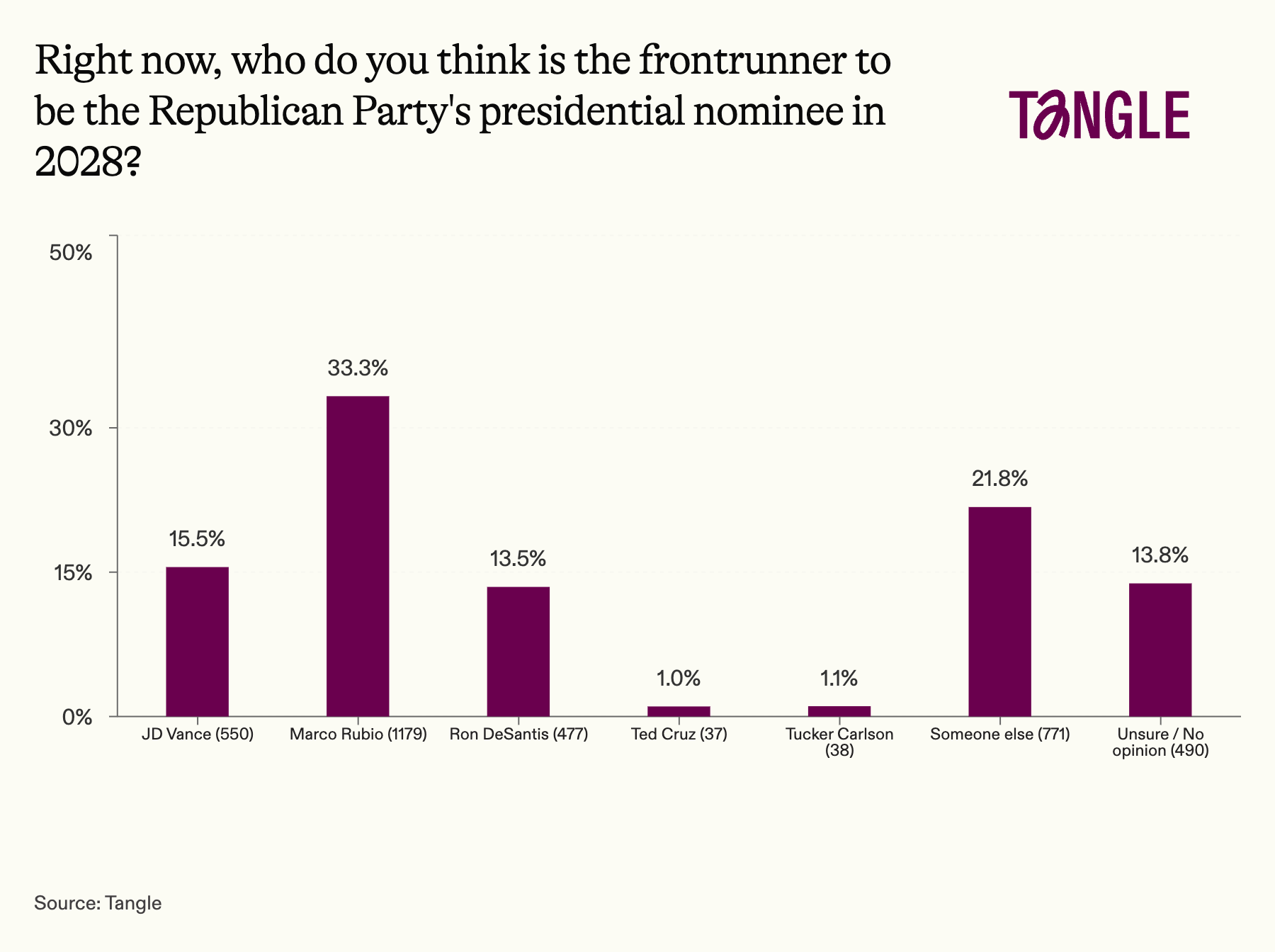
- Our last survey: 3,542 readers responded to our survey on the Republican frontrunner for the 2028 presidential nomination, with 33% saying Secretary of State Marco Rubio. “Rubio: bilingual, highly intelligent, articulate, and knowledgeable about international politics,” one respondent said. “Ted Cruz [or] Ron DeSantis. Rubio and Vance are too closely tied to the Trump administration,” said another.
Have a nice day.
In 2015, Jennifer Cabral and Deb Matthews noticed two problems: euthanasia as the last resort for unadoptable feral cats and farms without barn cats. They founded HART Rescue, which matches these cats to local farms. When someone reports a feral or antisocial cat, the nonprofit coordinates with a veterinarian to spay or neuter and vaccinate the cat before returning it to the shelter to await placement. HART Rescue lists the animal online and gives information directly to farmers wanting to adopt a new employee to keep the rodent population in check. The program has found homes for 634 cats and ended euthanasia at their local shelter in Cumberland County, Tennessee. “This is why we started the program,” Cabral said. “To give these cats a chance to live their lives.” Good Good Good has the story.