








 500,000+ readers just today.




The White House press bans.
Good Tuesday morning and welcome to Tangle. I’m Isaac Saul, fresh off a Yom Kippur fast and a day spent in synagogue. I feel sufficiently reminded of all that I have to atone for from the last year, and also how much I need coffee and water. Special thanks to Senior Editor Will Kaback for penning yesterday’s take, which was a fascinating read on the evolving situation in the Middle East.
Today, I’m back to write about the president’s media diet — which apparently excludes CNN, Politico and MS NOW, as those outlets are now banned from the White House. Plus, a reader question about Congress’s early recesses and an under-the-radar story on enforcing a law against firearm sales to 18–20-year-old buyers. We’re clocking a 15-minute read.
Ari Weitzman, Will Kaback, Audrey Moorehead, Carina Pacheco, Russell Nystrom, Isaac Wood, and Bailey Saul edited or contributed to today’s newsletter.Too busy to read? Push play instead!

Some changes are coming.
Next Tuesday, we’re going to be announcing a new product and some formal changes to this newsletter. The first people to know about it will be readers of Press Pass, our once-a-month, members-only newsletter where we pull back the curtain on the business operations of Tangle, interview our staff, and share updates about how our product continues to evolve.
To access Press Pass and all our members-only content, you can become a member here (subscribing will ensure you receive the emails going forward).
Quick hits.
- A federal appeals court reinstated a Missouri congressional map designed to net Republicans an additional seat in the U.S. House, finding that requiring the state to use the previous version of the map would be unconstitutional. The case is expected to go to the Supreme Court. (The ruling)
- The Federal Aviation Administration grounded flights at major airports in the Northeast after a telecommunications outage. Transportation Secretary Sean Duffy said that “an Amtrak construction crew accidentally cut into a fiber line in New Jersey,” causing the outage. (The incident)
- Paramount and a group of state attorneys general reached an agreement that will allow the company to proceed with its $81 billion merger with Warner Bros. Discovery. As part of the deal, Paramount said it will create an editorial-independence board to oversee CNN and CBS News. (The agreement)
- The United Nations General Assembly’s General Debate begins today in New York City, with President Donald Trump, Israeli Prime Minister Benjamin Netanyahu, Iranian President Masoud Pezeshkian, and other Middle East leaders expected to attend. (The assembly)
- President Trump said his administration is negotiating a deal with Belarus to buy potash — salts used as agricultural fertilizer — amid the United States’s ongoing trade war with Canada, its largest potash supplier. However, Belarusian President Alexander Lukashenko said his country does not have available supply to sell. (The latest)
Maybe Stop Letting Strangers Sell Your SSN
You read Tangle, so you probably know more about data privacy than you’d like to. But do you know how much of your information is floating around online?
Data brokers collect everything from your phone number and date of birth to addresses and other sensitive information — then package and sell it. Best case? More eerily specific ads. Worst case? That information ends up exposed in a breach or in the hands of scammers.
Incogni does the tedious part for you, sending removal requests to data brokers and People Search Sites and continuing to follow up when your information reappears.
Because you have enough things to worry about without periodically Googling yourself.
Tangle readers get 55% off unlimited removals with code TANGLE.
Today’s topic.
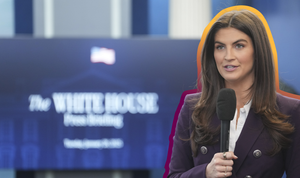
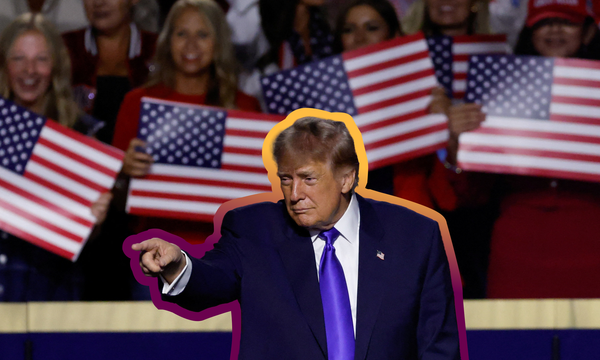
The White House press bans. On Friday, President Donald Trump announced he is barring journalists from CNN, MS NOW, and Politico from the White House. The president accused the outlets of inaccurately reporting on his administration and suggested that additional news organizations could be banned. On Monday, the outlets sued the government for allegedly violating their First Amendment rights.
In a Truth Social post on Friday, Trump wrote, “Media Outlets shouldn’t be able to constantly write or report FICTION and LIES when they’re covering the President of the United States, the Trump Administration, or the United States of America.” On Monday, he said the ban was not “an assault on the Free Press” but “an assault on the FAKE NEWS, something that has grown like Cancer in our beloved United States of America.”
On Saturday, CNN, MS NOW, and Politico reporters shared that they had been blocked from entering the White House grounds and had their press passes confiscated. In a Monday statement, the outlets announced they have filed a lawsuit against the ban “to protect our First Amendment rights and defend the principle that the government does not decide what the press reports or publishes.” The organizations are seeking an injunction to pause the ban’s enforcement and restore their journalists’ access to the White House.
CNN, along with ABC, CBS, Fox News and NBC, is a member of the White House television press pool, which provides broadcast coverage of the president. The networks share the costs and duties of reporting from the White House, and with CNN barred from the grounds, the pool announced they will stop providing televised coverage of President Trump while the press ban is in place. Bryan Boughton, the Washington Bureau Chief at Fox News Channel and current acting chair of the pool, said that the decision “follow[ed] the White House’s position preventing CNN from fulfilling its assigned pool duties.”
On Monday evening, the White House announced the launch of “Trump TV,” a streaming channel that will share “top videos, major remarks, and must-see highlights” from the Trump administration.
Below are perspectives from the right and left on the bans, followed by Executive Editor Isaac Saul’s take.
|
What the right is saying.
|
In American Thinker, Andrew Widburg said Trump is “targeting coverage that has… consistently erred.”
“The mainstream media instantly insisted that Trump was violating the First Amendment,” Widburg wrote. “Since the Constitution doesn’t mention an inherent right to be in the White House to report on and comment on the news of the day, that argument is invalid. As I see it, the only colorable basis for the media’s fight is to claim illegal viewpoint discrimination. That is, that these outlets are being kicked out because they oppose Trump and his policies.
“However, Trump never said that they were being kicked out because they disagreed with him. Indeed, there is no indication that he’s globally blocking any political opponents from access to the White House. Instead, he made a specific allegation about these outlets, which is that they have engaged in knowingly dishonest reporting,” Widburg said. “In sum, the White House position is that it’s not kicking out newsrooms that disagree with Trump. It’s kicking out newsrooms that lie to destroy Trump.”
In PJ Media, Matt Margolis suggested Trump didn’t pick “the smartest way to fix [the problem].”
“Let’s be honest here. The First Amendment doesn’t entitle any media outlet access to the White House grounds. Not every outlet gets a press pass, and that’s never had anything to do with freedom of the press,” Margolis wrote. “You don’t have to try too hard to find examples of these outlets pushing fake news. And let’s be honest here, I don’t even think MS NOW pretends to practice journalism.”
“There’s nothing wrong with journalists being critical of a president. That’s the job. But the job is to report the news accurately, not promote an agenda as legitimate news coverage,” Margolis said. “Still, this probably could’ve been handled better. The optics aren’t good. Picking a fight with the press corps this close to the midterms isn’t the message Trump’s team should want dominating the news cycle. It’s a distraction from arguments he could actually be winning.”
In his blog, Jonathan Turley argued “the odds are against the President.”
“In Sherrill v. Knight, the [Supreme Court] ruled that the First Amendment limited the right of the White House to arbitrarily deny a press pass to a journalist. Since that time, viewpoint discrimination has long been viewed as not a reasonable basis for exclusion,” Turley wrote. “In this case, the White House gave no procedural protections or any reason other than the President’s view that these outlets were publishing ‘fake news.’”
“The White House will have to argue that it can deny access without notice, procedural protections, and based entirely on the content of coverage. In other words, it will have to argue that it can engage in viewpoint discrimination,” Turley said. “This would create a dangerous and unfettered power. Future presidents could use it to bar conservative media and outlets that expose government abuse or waste. Whatever the outcome of this litigation, it is not a policy that advances our core values and traditions.”
|
What the left is saying.
|
The New York Times editorial board said “Trump is attacking press freedom and disregarding the law.”
“Twice during President Trump’s first term, his administration tried to prevent a journalist whose work it did not like from reporting at the White House. Twice, judges rejected the moves as unconstitutional and restored the journalists’ access,” the board wrote. “Now the administration is attempting the same move, barring journalists from CNN, MS NOW and Politico from the White House because they had written what the president called ‘purposefully negative stories.’”
“The seemingly arcane question of which media organizations have access to the White House fits with a larger pattern of Mr. Trump’s attempts to control the media. Officials from his administration have searched the home of a Washington Post reporter and served subpoenas to staff members of The New York Times,” the board said. “He has impinged on press freedom in ways that no other modern president has. If he now gets away with punishing CNN, MS NOW and Politico, he will be able to credibly threaten other organizations.”
In MS NOW, Dan Froomkin called the action “Trump’s unconstitutional press ban.”
“Banning journalists won’t make the bad news go away. The media isn’t lying about the war Trump started in Iran, or the haphazard and nonsensical tariffs he imposed, or the grocery and gas prices,” Froomkin wrote. “And now, increasingly, unavoidably, Trump can see that more and more American voters are turning against him. The polls predicting Democratic success in the midterm elections must be weighing on him… But shooting the messenger never works.
“And it likely won’t last, either. It is hard to imagine a more overt violation of the First Amendment than punishing journalists because he doesn’t like their coverage. That is a textbook example of viewpoint discrimination, which is unconstitutional,” Froomkin said. “This is a tired playbook that will do little to distract the nation’s focus from his dismal record and his failure to deliver on his biggest campaign promises: Stop the forever wars and bring down prices. And unfortunately for Trump, journalists can keep reporting on all those things, whether standing in the Oval Office or safely outside the Secret Service perimeter.”
In The Atlantic, Jonathan Chait argued “Trump’s attacks on the media are self-defeating.”
“Donald Trump is presiding over a failing presidency and lashing out at the news media — most recently by banning CNN, Politico, and MS NOW from the White House,” Chait wrote. “There might seem to be a connection between these two things, but the causal link is not that Trump is punishing the press because he is failing; rather, it’s the opposite. His inability to govern is in part a consequence of his hatred for the news media.”
“[Trump] has turned his party into a personality cult that disregards all evidence of failure. This project requires constant reminders that the hated press cannot be trusted, and that Trump himself is the source of all truth,” Chait said. “The most profound effect of his attacks has been to seal off many Republican minds from the fresh air of critique and correction. But the GOP’s efforts to discredit the media, rather than protecting the party from its own governing failures, have only made those failures worse.”
|
||||
|
||||
|
Reminder: This is where we share a personal opinion. If you have feedback, criticism or compliments, leave a comment or reply to this email.
|

Let me start with an obvious point that everyone should grant: News organizations don’t have a First Amendment right to just walk into the White House.
The Trump administration — and its defenders under “What the right is saying” — are correct when they argue that covering the White House as part of the press pool is a privilege, not a right. However frustrating the president’s messaging, these organizations aren’t having their rights infringed solely by being denied presidential access. I’m the leader of a news organization, and I’ve been reporting on national politics for 15 years, yet all my applications for a White House press pass have been denied. I don’t automatically get access to the president just because I’m a member of the media.
So yes, a White House press pass is a privilege; you have to apply, be accepted into the press pool, and follow the rules once you’re inside. There is a reason the room is populated by the biggest news organizations in the world.
However, that doesn’t mean this move is fair or even legal. Revoking a news organization’s access based on the content of their reporting is almost certainly a form of viewpoint discrimination, which is a violation of the First Amendment. The Trump administration may also be violating their due process and property rights under the Fifth Amendment, which is exactly the grounds on which news organizations are now suing the Trump administration. I suspect, too, that those outlets will win their lawsuits on the merits, especially since the Trump-appointed judge assigned to the case has shown a keen deference toward press freedom in the past.
So, yes: The White House gets to choose who’s in the room. But they don’t get to revoke access for people or organizations because they don’t like their coverage. That tug of war between the federal government and the media is well established, and it’s something we should all be grateful for.
Which brings me to the White House’s defense of this move. In response to CNN posting a statement about the ban, the White House Rapid Response team posted a graphic of purported CNN “hoaxes” over the years:
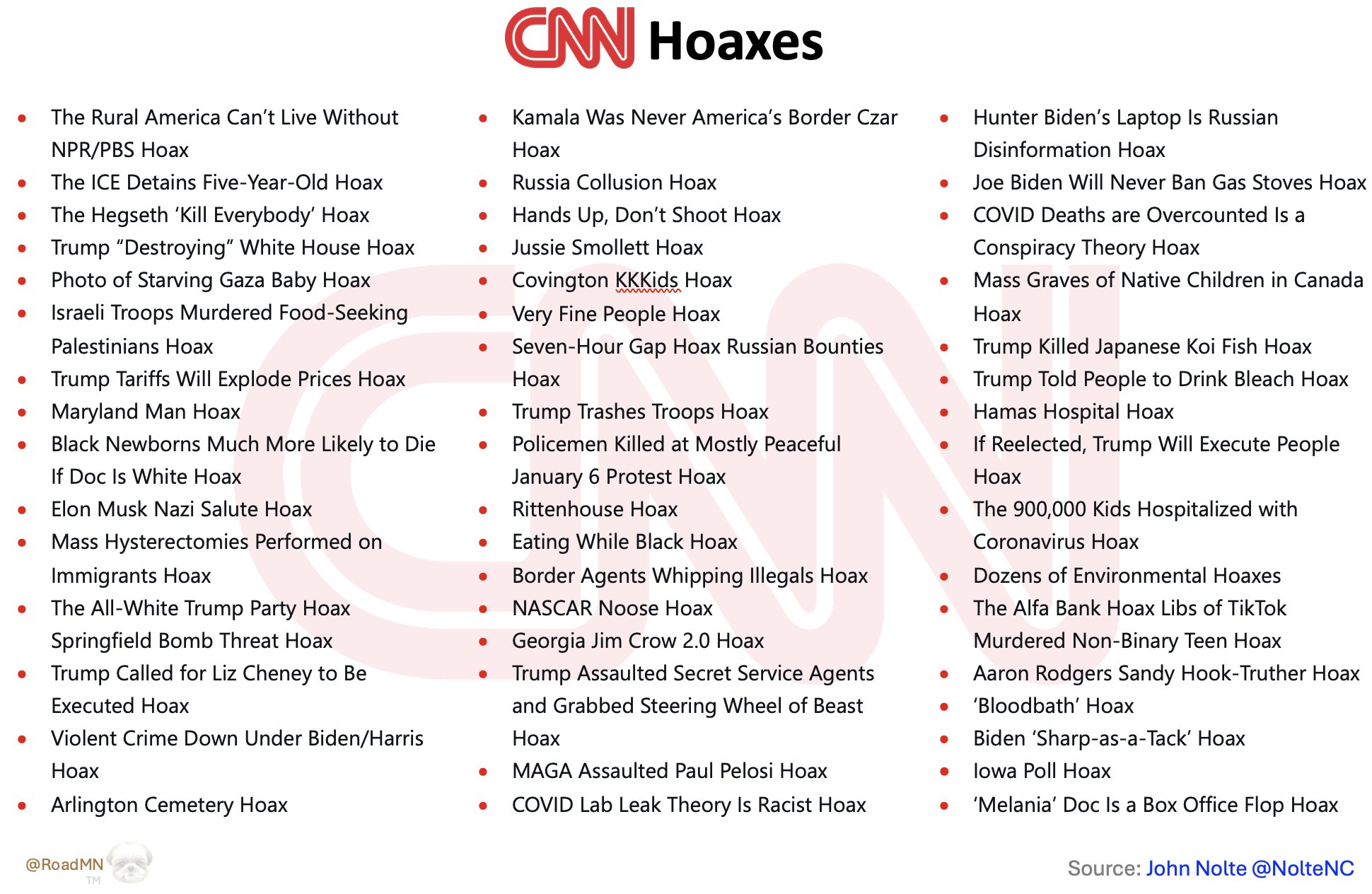
The graphic is actually instructive as a look into how the White House thinks about past reporting and what it deems “fake” and “real” news. Very few of these stories were actually hoaxes — that is, totally fictional accounts — save examples like Jussie Smollett faking his own racially charged attack (which was something CNN reported on with insufficient skepticism, not a myth the outlet itself created from whole cloth). But within Trump’s orbit, the definition of the word hoax has morphed into anything from “story published with inaccuracies” to “exaggerated or misleading story.” And it’s true CNN has had some whoppers over the years.
The “Covington Kids” story was reported with so much bias as to obscure the reality of what happened, and CNN paid the price for it. Claims that Trump promised a “bloodbath” if he lost the election were intentionally quoted out of context to make it seem like he was promising a civil war rather than warning that the auto industry would fail without him. Kyle Rittenhouse was never driven across state lines by his mother, and he did not illegally transport a rifle across state lines, both inaccurate claims CNN reported. Trump never called for Liz Cheney to be executed, but he did insist she stand on the front lines of a war before sending our kids off to fight it for us (this was before Trump launched the Iran war). Other times, CNN leaned into a technically true framing — like the fact that Kamala Harris was never technically border czar — that obscured the truth so much as to be misleading.
I have written or tweeted about most of this inaccurate or misleading reporting in the past, and all of these mistakes always seem to go in one direction. CNN is deserving of criticism for its consistent and demonstrated anti-Trump bias, and the White House is well within its rights to use its bullhorn to call it out.
At the same time, a lot of the purported “hoaxes” in the graphic are real things that happened that CNN and other outlets reported accurately. David DePape, the man who assaulted Paul Pelosi, was a die-hard Trump supporter. And after the assault, many in the MAGA world — including Trump’s own son — mocked Pelosi for being brutally beaten by one of their own supporters. That isn’t a hoax. Trump did run for re-election while promising to pursue death penalties again, and he has since pushed for reinstating firing squads. This, too, is not a hoax. Israeli troops did, actually, shoot and kill food-seeking Palestinians at an aid site. Also not a hoax. And Melania Trump’s documentary was a box office flop, earning just over $16 million after Amazon spent $40 million to buy it. You guessed it — not a hoax.
CNN was right to report that Biden never banned gas stoves and never pushed for such a ban. All that he did was appoint a commissioner on the independent Consumer Product Safety Commission who called gas stoves a “hidden hazard” and said “any option is on the table” in an interview, which conservative columnists then wrote about as Biden planning to ban gas stoves. Biden never planned to do such a thing, and immediately responded to the comments by saying he had no such plans. It was a rather silly story that got blown way out of proportion, and under the Trump administration’s definition, it’s actually an example of a conservative media-led “hoax.”
Trump has offered other justifications for the ban, like claiming Politico was awarded some kind of untoward contract by the federal government as a quid pro quo arrangement for favorable coverage. This claim is also a lie, one that I wrote about at the time in a piece for The Free Press.
Some of Trump’s allies have offered their own defense, arguing — for example — that past administrations have limited access to certain members of the press. Many of these examples are deliberately misleading — like the case of an African journalist named Simon Ateba being “barred” by the Biden administration when, actually, he was denied a permanent hard pass but granted a day pass every time he requested one.
Other defenders of the president argue that he has a right to ban these outlets because of their bias. “Reporters covering White House briefings should be conveying facts, not spin,” Ward Clark wrote in RedState. Ironically, if that’s true, then RedState’s own press credentials for the Pentagon and White House should be revoked immediately, given that — as their name implies — they are a news organization whose agenda is explicitly aligned with Trump’s.
Quotes like Clark’s make it exceedingly clear how silly and dangerous this all is. Every administration has its critics and allies in the press; this has been true since the Washington administration, and it should be true going forward. None have ever done what Trump is attempting to do now. Bias is in the eye of the beholder, which is precisely why nobody should support an administration banning news outlets it deems as biased — even if they have a track record of mistakes. All that does is ensure future administrations will further restrict press access they don’t like, which is a loss for anyone who believes in free exchange.
It’s astonishing to me that the administration thinks this is the play right now. Yes, the media — writ large — is distrusted by the public and obsessed with itself and will inevitably devote plenty of coverage to its own lawsuits and fights with the administration. I’m sure some of them will even build subscription drives off the battle. That’s their right, and maybe Trump is just betting that CNN, MS NOW and Politico will spend more time on “resistance” navel-gazing and less time critically reporting on actual stories about his administration.
But the knock-on effects are already breaking against him. Yesterday, the administration held an event so Trump could unveil his new helipad, but there was no audio on the televised event because there was no press pool after the other four networks, including Fox News, banded with CNN and against the ban. It was actually really encouraging to see Fox News's Washington bureau chief condemn the ban during his time as chair of the broadcasting consortium — a reminder that, despite our perceptions of these organizations as partisan warriors, they still lean on traditions of collegiality and mutual respect.
Hours later, Trump launched “Trump TV,” a 24/7 streaming show on the White House YouTube channel that purports to play the greatest hits of his administration, live updates, and breaking news. When I checked the channel out this morning, there was a grand total of 934 people watching a re-run of a Trump rally — and commenting was prohibited. This is the same administration that promised to “restore free speech.”
Really consider the context here: Gas and diesel prices are both significantly higher than they were when Biden left office, and rising. We’re still stuck in the Iran War, which is now spreading. The Russia–Ukraine war rages on. Inflation is higher today than it was when Biden left office. The number of uninsured Americans has gone up since Biden left office. The native-born employment rate is stagnant. Real wage gains are down, too. There is no long-promised healthcare bill, no election reform bill, no immigration reform bill. The House was just sent home after doing a grand total of four months of work this year because they didn’t want to take a tough vote on impeaching Trump’s secretary of Defense. Now, they won’t be back until after the midterms.
If any of this concerns you, don’t worry; President Trump is focusing his time on what matters. He just got a new helipad at the White House. He’s hard at work building his ballroom and fighting to get his name on the Kennedy Center (or knock it down), and he’s got plans to turn his grand arch into a drone-deploying military station. And now, thankfully, he’s banned three news organizations from the White House who post stories he doesn’t like, which will inevitably result in taxpayer money being used to fight lawsuits from those organizations that he will very likely lose.
If this is how the president thinks he can stave off a midterm blowout — or rescue his quickly sinking approval ratings — then the bubble he’s living in is farther removed from reality than I even thought. That’s bad news for Trump, worse news for us, and a much bigger deal than any of the shoddy reporting we’ve all had to live through over the last decade.
Take the survey: What do you think of Trump’s press ban? Let us know.
Disagree? That’s okay. Our opinion is just one of many. Write in and let us know why, and we’ll consider publishing your feedback.
Your questions, answered.
Has sending everyone home to avoid certain votes been a key part of the House Speaker job before Mike Johnson? It seems pretty common these days but I don’t recall this happening regularly in the past.
— Brad from Springfield, MI
Senior Editor Will Kaback: Speaker Johnson has used the tactic several times during the 119th Congress. Outside of the most recent example, when GOP leadership adjourned the House one day early seemingly to delay a vote on impeaching Defense Secretary Pete Hegseth, Johnson deployed similar maneuvers to put off tenuous votes on the SAVE America Act (in June) and releasing documents related to convicted sex offender Jeffrey Epstein (in July).
Before this Congress, the specific tactic of beginning a scheduled recess early to avoid a tough vote was fairly rare. One of the closest examples on the Democratic side came in 2010, when then-Speaker Nancy Pelosi (D-CA) cast the decisive vote to adjourn the House until after the midterms to avoid a vote on extending the Bush-era tax cuts.
Separately, adjournments in general (not necessarily early adjournments) are a familiar way to sidestep votes. In June of 2016, Speaker Paul Ryan (R-WI) adjourned the House until after the Fourth of July despite a 26-hour sit-in protest by Democratic lawmakers attempting to force a vote on gun-control measures following the Pulse nightclub shooting in Orlando, Florida.
A stand-out characteristic of Speaker Johnson’s early adjournments is that they’ve all been used to counter measures pushed by fellow Republicans. Rep. Thomas Massie (R-KY) introduced the Hegseth impeachment articles, President Trump and other House Republicans were a driving force behind the SAVE America Act dispute, and members of the House Freedom Caucus had long been pushing for release of files related to Jeffrey Epstein.
Want to have a question answered in the newsletter? You can reply to this email (it goes straight to our inbox) or fill out this form.
Under the radar.
In a legal opinion released last week, the Department of Justice (DOJ) concluded that a federal law restricting the sale of handguns to 18–20-year-old buyers violated the Second Amendment. The Supreme Court has never weighed in on the constitutionality of the 1968 law, which does not restrict the purchase of other firearms, such as rifles or shotguns. The opinion from T. Elliot Gaiser, the assistant attorney general for the DOJ’s Office of Legal Counsel, does not change the law or bind judges, but it is expected to impact how prosecutors across the country approach cases involving underage handgun sales. Axios has the story.
Some Strangers Know Way Too Much About You
Your phone number. Your address. Your date of birth. Data brokers collect and sell a surprising amount of personal information. Incogni sends removal requests and follows up when your data pops back up.
Basically, they do the annoying part.
The extras.
- One year ago today we covered ABC’s temporary suspension of Jimmy Kimmel.
- The most clicked link in our last regular newsletter was the report on President Trump banning CNN, MS NOW, and Politico from the White House.
- Nothing to do with politics: Fill out your bracket for Fat Bear Week 2026.
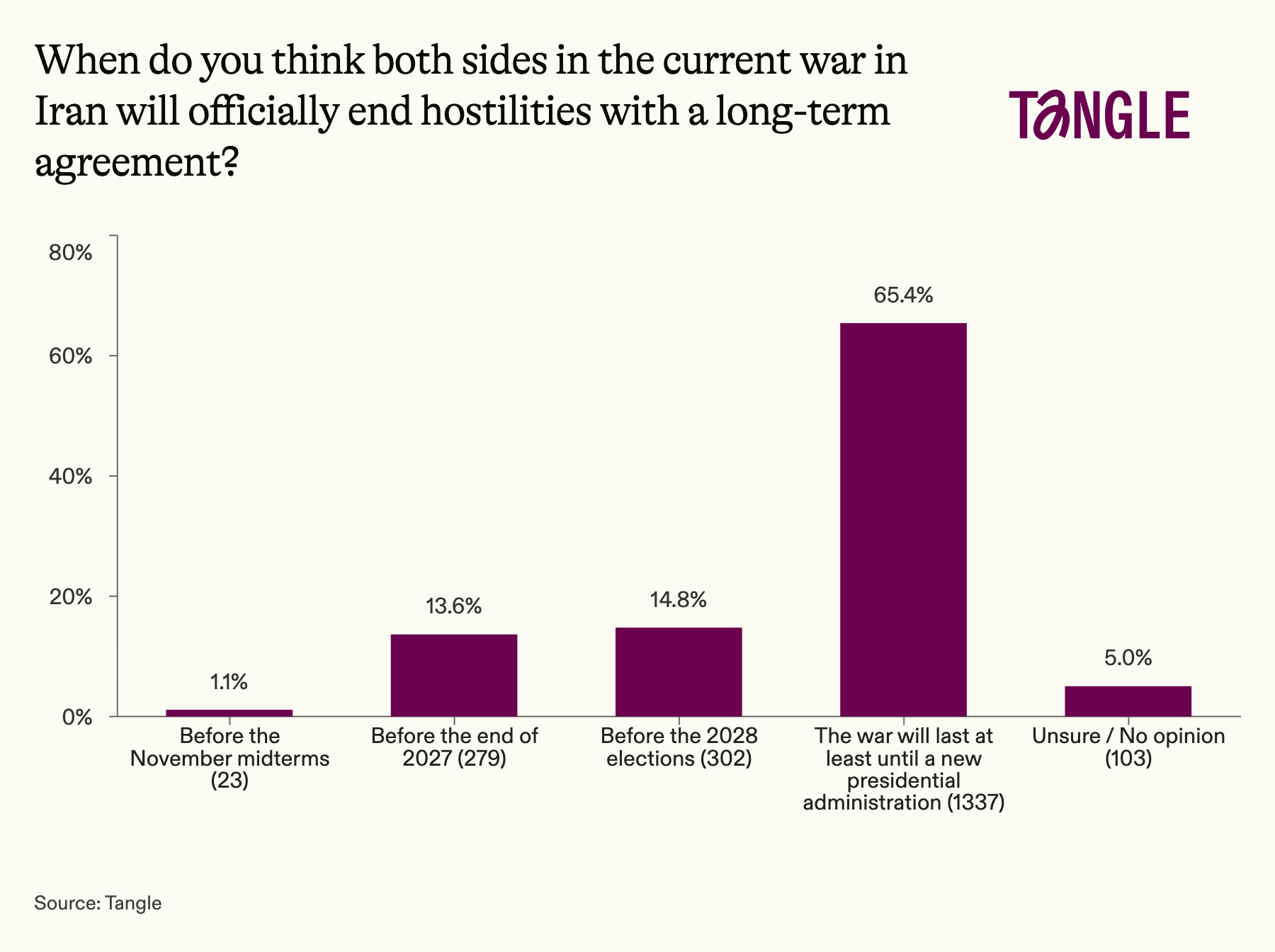
- Our last survey: 2,044 readers responded to our survey on the future of the war in Iran, with 65% saying the war will last at least until the next presidential administration. “The war will not ‘officially’ end, but just ebb and flow for many years or until the next POTUS says enough is enough and unilaterally withdraws,” one respondent said. “The war with Iran and its proxy allies will end when the U.S. and the rest of the West get their act together and finish what was started at the end of February,” said another.
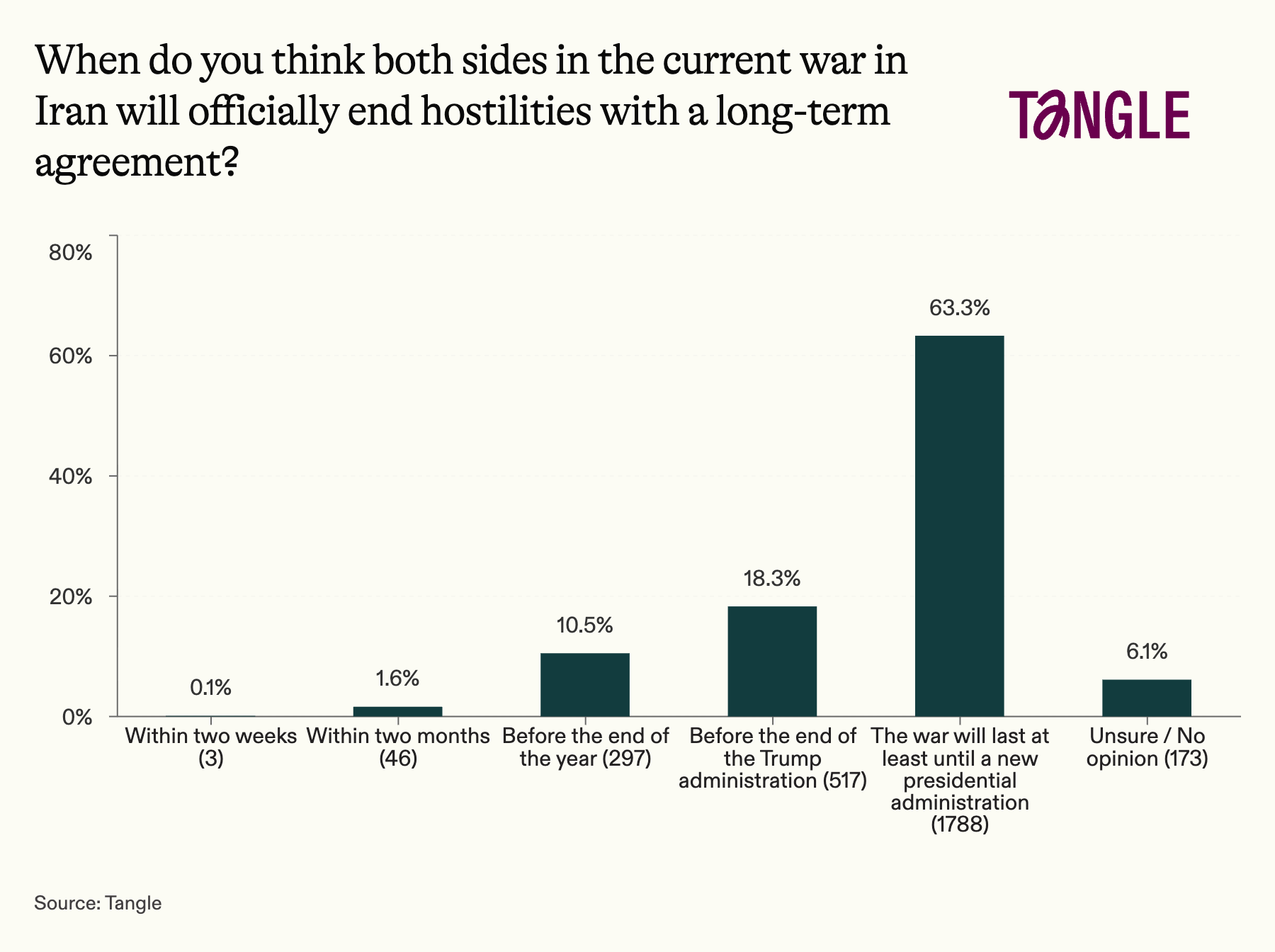
We asked readers the same question on July 14, and these were the results:
Have a nice day.
Matt Krishnan-Bird wanted a group of like-minded individuals to share the problems and joys of parenthood in his hometown of Colchester, England. Moms’ support groups seemed abundant, but he couldn’t find a group for dads. So Krishnan-Bird took matters into his own hands and created the Good Dads Club of Colchester. Now 400 members strong, the group’s dads share parenting tips, meet up for in-person outings, and provide each other with mental health support. “I think men, notoriously, are not good at talking and opening up to people,” Krishnan-Bird said. “But I think by creating a safe space and an environment where people feel they can trust other dads, it’s a really good chance to address mental health problems.” The BBC has the story.