



Sign up for the Free Tangle Newsletter Highly curated unbiased news for busy, open-minded people.
Processing your application
Please check your inbox and click the link to confirm your subscription.
There was an error sending the email
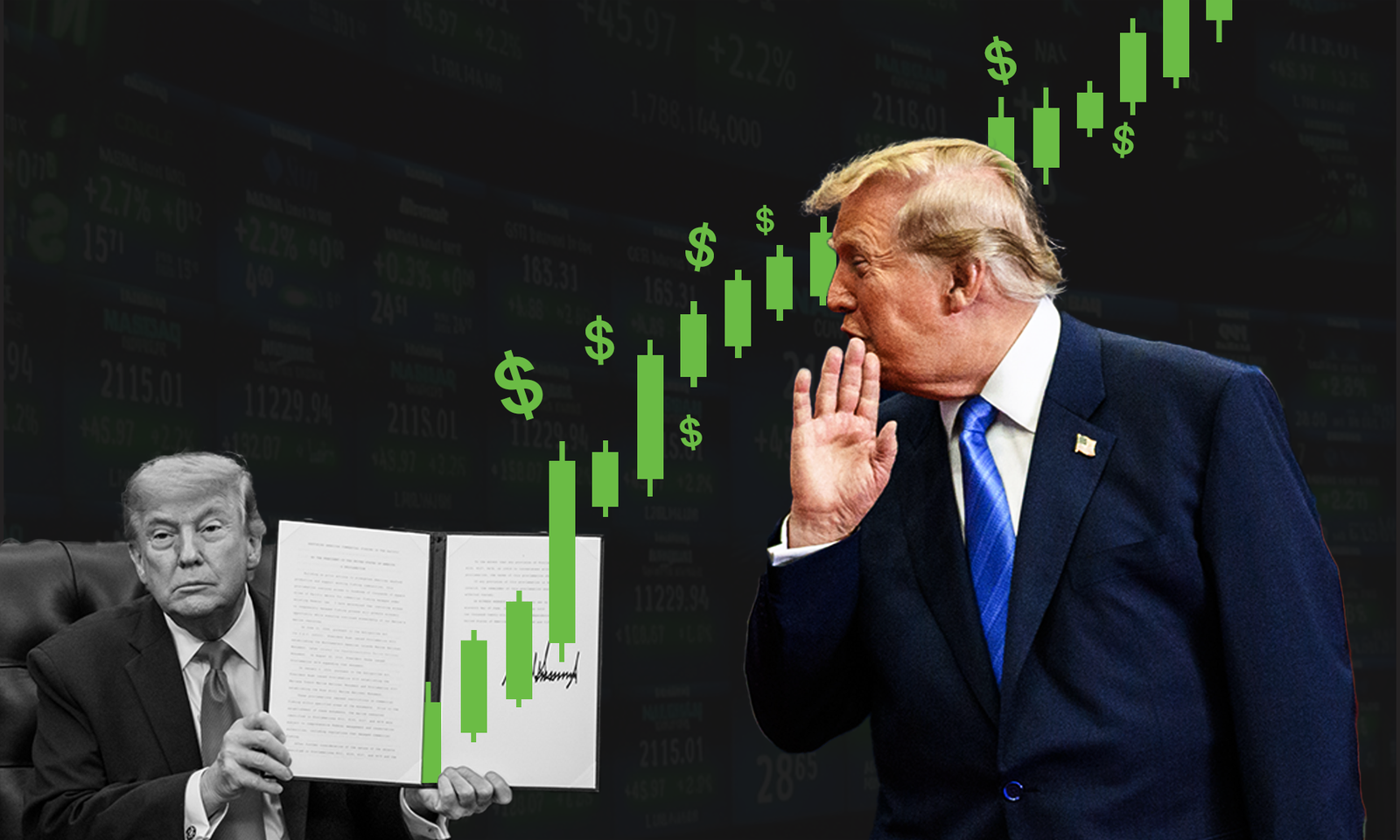
President Donald Trump speaks at a press briefing following a shooting during the annual White House Correspondents’ Dinner on Saturday | REUTERS/Jonathan Ernst, edited by Russell Nystrom

Various Trending Posts this week

Photo by Ryan Linton, Wikimedia CommonsThe National Cathedral in Washington, D.C. | Photo by Ryan Linton, Wikimedia Commons, edited by Russell Nystrom

Not everything is Christian nationalism.

How Christians think about their politics.
Signs on the April 21 redistricting referendum in Virginia | Kendall Warner/The Virginian-Pilot, edited by Aidan Gorman
New York City Mayor Zohran Mamdani and Deputy Mayor Julie Su announce the first site identified for the City's municipal grocery store program.

Members-only posts

Soldiers help each other during the 1980 Iran–Iraq War | Bhavya Mathur, Wikimedia Commons

The Sunday — April 26

This is the Tangle Sunday Edition, a brief roundup of our independent politics coverage plus some extra features for your Sunday morning reading. What the left is doodling. What the right is doodling. Suspension of the Rules On this week’s episode, Isaac, Ari, and Kmele discuss the Virginia redistricting
Photo by Ryan Linton, Wikimedia CommonsThe National Cathedral in Washington, D.C. | Photo by Ryan Linton, Wikimedia Commons, edited by Russell Nystrom

Not everything is Christian nationalism.

How Christians think about their politics.
Photo from Jo Madnani | Edit by Candida Hall

The Sunday — April 19

This is the Tangle Sunday Edition, a brief roundup of our independent politics coverage plus some extra features for your Sunday morning reading. What the right is doodling. What the left is doodling. Suspension of the Rules On this week’s episode, Isaac, Ari, and Kmele talk about growing divides

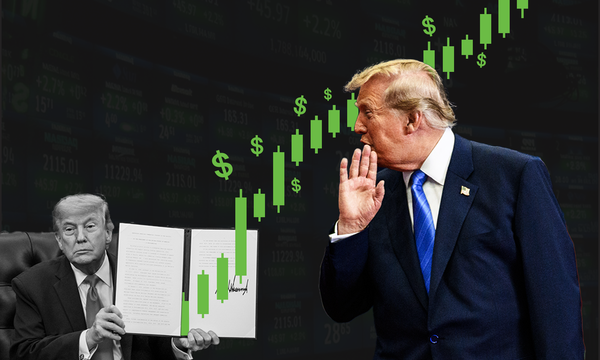
Donald Trump

Opposition party leader Peter Magyar waves a Hungarian flag in celebration after incumbent Prime Minister Viktor Orbán conceded defeat in the country's election.
A photo of the Strait of Hormuz taken from the International Space Station
Russell Vought, director of the Office of Management and Budget (OMB), in front of the White House on July 7, 2025 | Al Drago/Pool/Sipa USA, edited by Russell Nystrom

Daily From the Newsletter

President Donald Trump speaks at a press briefing following a shooting during the annual White House Correspondents’ Dinner on Saturday | REUTERS/Jonathan Ernst, edited by Russell Nystrom

Sunday Special Edition

Members-only - Get Access

This is the Tangle Sunday Edition, a brief roundup of our independent politics coverage plus some extra features including reader additions for your Sunday morning reading.

Soldiers help each other during the 1980 Iran–Iraq War | Bhavya Mathur, Wikimedia Commons
Photo by Ryan Linton, Wikimedia CommonsThe National Cathedral in Washington, D.C. | Photo by Ryan Linton, Wikimedia Commons, edited by Russell Nystrom
Signs on the April 21 redistricting referendum in Virginia | Kendall Warner/The Virginian-Pilot, edited by Aidan Gorman
New York City Mayor Zohran Mamdani and Deputy Mayor Julie Su announce the first site identified for the City's municipal grocery store program.
FBI Director Kash Patel, Lt. Gen. James Adams, Director of National Intelligence Tulsi Gabbard, Lt. Gen. William Hartman and CIA Director John Ratcliffe
USS Spruance intercepts the Iranian-flagged cargo ship Touska in the north Arabian Sea | CENTCOM/Handout via Reuters, edited by Russell Nystrom

Sunday Special Edition

Members-only - Get Access

This is the Tangle Sunday Edition, a brief roundup of our independent politics coverage plus some extra features including reader additions for your Sunday morning reading.

Photo from Jo Madnani | Edit by Candida Hall
A Google engineer at a Google Data Center in 2012 | Connie Zhou/Google/ZUMAPRESS.com, edited by Russell Nystrom
Anthropic’s Project Glasswing website is displayed on a smartphone screen | Jonathan Raa/NurPhoto, edited by Russell Nystrom
Nancy Cordes interviews two women who accused Rep. Eric Swalwell (D-CA) of sexual misconduct | Screenshot, CBS Evening News, YouTube, edited by Russell Nystrom
Opposition party leader Peter Magyar waves a Hungarian flag in celebration after incumbent Prime Minister Viktor Orbán conceded defeat in the country's election.

Get daily articles in your inbox.

Tangle - unbiased news for busy people.
Processing your application
Please check your inbox and click the link to confirm your subscription.
There was an error sending the email

From YouTube

Security camera footage shows suspected WH Correspondents’ dinner shooter charging through security.
Trump evacuated from White House Correspondents’ Dinner after shots fired.
👉 Why Hundreds of Chinese Ships Are Off Argentina’s Coast
Trump’s Numbers Are Crashing… Now What?
Why Hundreds of Chinese Ships Are Off Argentina’s Coast
Steve Hilton: How to Fix California
Swalwell, Gonzales, and the Politics of Consequences
Are Social Media Companies Finally Being Held Accountable?

Topics

President Donald Trump

Israel

65

Iran

30

President Donald Trump

Joe Biden

149

United States President Joe Biden

Israel

65

United States Congress

Tired of one-sided political news? Get a 360-degree view of the biggest stories.

Political news is broken. We’re fixing it. We're a non-partisan politics newsletter that gives you a 360-degree view on the news. No spin. No clickbait. Opinions from the left, right, and center so you can decide. Join over 500,000 independent thinkers in 55+ countries. Unbiased news for busy people.

500,000+ subscribers reading today.

500,000+ subscribers and growing daily

Busy folks who want clear, unbiased news.

99% of our subscribers keep coming back

Less than 1% of readers unsubscribe.

Awarded “Center” Media Bias Rating

Rated Center by AdFontes and Allsides.com

4 Free and 2 member newsletters weekly

A consistent set of news and reader content.

You will always get:

What the left is saying What the right is saying Tangle's take on the story

The White House correspondents’ dinner shooting.

By Isaac Saul Apr 27, 2026
View in browser President Donald Trump speaks at a press briefing following a shooting during the annual White House Correspondents’ Dinner on Saturday | REUTERS/Jonathan Ernst, edited by Russell Nystrom

I'm Isaac Saul, and this is Tangle: an independent, nonpartisan, subscriber-supported politics newsletter that summarizes the best arguments from across the political spectrum on the news of the day — then “my take.”

Are you new here? Get free emails to your inbox daily. Would you rather listen? You can find our podcast here.

Today’s read: 14 minutes.

A suspect is in custody after allegedly targeting the president at the annual event. Plus, how do we evaluate potentially AI-generated videos?

How Christians think about their politics.

I think Americans of various political and religious stripes often forget that we do live in a pluralistic society — one where Christians, or Jews, or Muslims, or atheists inevitably bring their theology to the ballot box or to the policy debate. And when that happens, those religious beliefs do inform our national identity — but that is not necessarily a bad thing.

In last Friday’s edition, Associate Editor Audrey Moorehead explored some Americans’ concerns about the rising influence of “Christian nationalism” in the U.S. government, breaking down what this term means, the influence of Christian beliefs on both sides of the aisle, and how we should think about that influence. You can read it here.

Quick hits.

  1. Sen. Thom Tillis (R-NC) said he will no longer block Kevin Warsh’s nomination to be the next Federal Reserve chair after the Justice Department said it is dropping its investigation into current Chairman Jerome Powell. With Tillis’s support, Warsh’s nomination is expected to advance out of the Senate Banking Committee to a confirmation vote. (The latest)
  2. President Donald Trump canceled plans for Special Envoy Steve Witkoff and Jared Kushner to travel to Pakistan for peace talks with Iran, saying discussions could be held over the phone. (The cancellation) Separately, Iran reportedly sent the United States a new peace proposal, offering to immediately reopen the Strait of Hormuz but delay negotiations over Iran’s nuclear program until a future date. (The offer)
  3. The U.S. Southern Command struck a boat allegedly operated by drug traffickers in the Eastern Pacific, killing three on board. The operation was the 55th confirmed strike on an alleged drug boat since the U.S. military began targeting vessels in the Caribbean and the Eastern Pacific in September 2025. (The strike)
  4. The Supreme Court will hear arguments on Monday in a case about whether law enforcement’s use of geofence searches — which collect cell phone location data from an area in which a crime occurred — violates the Fourth Amendment’s protections against unreasonable searches and seizures. (The case)
  5. King Charles III arrives in the United States today for his first state visit as king. The king will meet with President Trump at the White House in addition to delivering a joint address to Congress and visiting other locations in Washington, D.C., New York City, and Virginia. (The visit)

Today’s topic.

The White House correspondents’ dinner shooting. On Saturday, a gunman fired shots at the Washington Hilton Hotel, which was hosting the White House Correspondents’ Association (WHCA) dinner. The Secret Service evacuated President Donald Trump and other senior leaders, and none of the guests were injured. One Secret Service officer was shot while engaging the suspect outside the ballroom, but he was wearing a bulletproof vest and was not seriously wounded. The gunman allegedly sent a manifesto to his family before the attack, suggesting that he intended to kill the president and other administration officials. He was charged with using a firearm during a crime of violence and assault on federal officers using a dangerous weapon.

Note: Due to the well documented contagion effect, Tangle does not name shooters or suspects in high-profile attacks. For similar reasons, we also try to share limited information about the shooter and their alleged motives where possible.

Back up: The WHCA hosts an annual dinner that brings together journalists covering the White House, top government officials, celebrities, and often the president and first lady. The event is billed as a “celebration of the First Amendment,” with comedians roasting guests through humorous speeches. Traditionally, the president is treated as the guest of honor at the event and gives a comedic keynote address; this year’s dinner is the first one President Trump has attended as president. 

According to law enforcement, the suspect was armed with a shotgun, a handgun and knives, and he rushed past a security checkpoint while exchanging fire with authorities. He was then tackled and subdued. Videos taken from inside the event show the Secret Service rapidly evacuating President Trump, First Lady Melania Trump, Vice President JD Vance, Cabinet secretaries, and White House advisers as other attendees sheltered in place. 

The suspect was identified as a graduate of the California Institute of Technology and a tutor living in Torrance, California. In his alleged manifesto, he wrote that he was attempting to target high-ranking administration officials and was surprised by how easy it was to bring weapons into the hotel, where he had checked in as a guest the day prior. 

Later on Saturday night, President Trump delivered a statement from the White House, praising law enforcement’s response and describing the reaction inside the room as “totally unified.” He also said the incident underscored the need for the planned White House ballroom, which is being designed to hold secure events with high-profile figures. 

Lawmakers in attendance expressed shock at the incident. “It’s a horrible, horrible moment for our country to see somebody want to attack or disrupt the event,” Rep. Brian Jack (R-GA) said. “It’s insane… that this is happening at the White House Correspondents’ Dinner. Security is supposed to be top notch,” Rep. Nanette Barragán (D-CA) said. 

Today, we’ll share responses to the shooting from the left and right, followed by Executive Editor Isaac Saul’s take.

What the left is saying.

  • The left condemns the attack, and many connect it to persistent gun violence in the U.S.
  • Some push back on conspiracy theories about the incident. 
  • Others say the suspect’s manifesto highlighted real security vulnerabilities.  

The Philadelphia Inquirer editorial board wrote “after a third attempt on his life, Trump could work to make America safer again.”

“President Donald Trump has now been involved in what appears to be an unprecedented three attempts on his life… Sadly, the attack at the White House correspondents’ dinner on Saturday will likely come and go with little consequence or reflection,” the board said. “But just imagine if Trump said enough is enough and used his immense charisma to turn those searing acts of horror into something positive by demanding commonsense gun reform… What if Trump told Congress he would like a package of commonsense gun reform bills on his desk before Election Day.”

“We — like others of goodwill — condemn this attempt on his life and all acts of political violence. By using the power of the presidency to take steps that could have a meaningful impact on firearm deaths, Trump has a chance to be a hero,” the board wrote. “Regrettably, that opportunity grows more unlikely by the minute. Instead of seeking unity, the president will soon be back to posting insults, lies, threats, hate, vitriol and late-night diatribes aimed at his perceived enemies — and giving no thought to how his anger and hate over the past decade has fueled the political divide.”

In Slate, Molly Olmstead explored the “conspiracy theorist bonanza” after the shooting.

“We do not yet fully understand the suspect’s motivations, but we have strong indications. He had donated to Kamala Harris’ presidential campaign, he had attended an anti-Donald Trump protest, and he had sent messages to family members before the attack denouncing the Trump administration,” Olmstead said. “Those signposts seemingly paint a straightforward picture of this attack as a politically motivated assassination attempt against the president and members of his administration. But if you ask observers — and particularly observers on the left — there’s something even more sinister going on here.

“It’s true that the attack will help Trump change the subject at a time when his myriad policy failures — particularly the war in Iran — have been front-and-center… But none of that comes close to proving that the shooting was intentional. Additionally, the Trump officials may have not appeared as visibly shaken as people expected simply because the shooter wasn’t actually anywhere near them,” Olmstead wrote. “The rapid impulse to insist the shooting was staged is further proof of just how deep we’ve ventured into a post-truth era, where anything that happens will be immediately engulfed in conspiracy theories.”

In The Atlantic, Graeme Wood said “the most frightening shooters are the smart ones.”

“The line ‘I experience rage thinking about everything this administration has done’ could probably have been written in an email to friends by any number of the attendees at last night’s White House Correspondents’ Association dinner. But the line was apparently written by a man who showed up with a shotgun and pistol and was ready to kill ‘most everyone’ there to get to Donald Trump and assassinate him and his Cabinet,” Wood wrote. “Random acts of violence by unstable individuals are unfortunately a feature of modern life. The most frightening shooters are not these yahoos, but the smart ones — those who carefully plan, train, and choose their settings to inflict maximum damage.”

“The email attributed to [the suspect] as well as the scant biographical details known about him suggest that he had the capacity to do much more harm than he did… [excerpts from the email] do not sound at all like the mad ranting that characterizes many of the encyclicals sent out by attempted assassins before their act. And [the suspect’s] complaints, though too vague to assess individually, are indeed the sorts of things one might reasonably get worked up about,” Wood said. “[The suspect] is right to note that a competent assassination squad would find the job easier than one might hope. He was, thankfully, wrong to think that he was such a squad all by himself.”

What the right is saying.

  • The right also condemns the attack, and many connect it to increasingly dehumanizing political rhetoric. 
  • Some criticize the Secret Service after another apparent close call. 
  • Others praise Trump’s demeanor and remarks after the shooting. 

The Free Press’s editors argued “the American way is under fire.”

“It’s impossible to ignore the fiery pitch of the current political climate. Just outside the hotel, protesters held placards that read ‘Death to Tyrants’ and ‘Death to All of Them.’ They waved these signs in the faces of shaken attendees even after the thwarted attack. Hatred toward public officials and ideological opponents abounds in American politics today, and has too often turned violent,” the editors said. “It struck us, as they waved these placards in the event’s aftermath, that it was the perfect emblem of our present moment. One in which calls for violence against people ‘on the other side’ can be stated flagrantly in public.”

“One can find examples of ugly, violent rhetoric being used across the political spectrum in America today, but the animosity aimed at Trump is on a level of its own. That fixation is the symptom of a broken politics,” the editors wrote. “The shooting is a reminder that the First Amendment alone cannot uphold free speech. Its legal protections for private individuals are essential, but the entire American system of expression, elections, and debate is also built on a shared culture — on the assumption that the elected representatives of the people will never lack the power to speak freely. Today, that can no longer be taken for granted.”

In The Federalist, Brianna Lyman said “the Secret Service failed Trump — again.”

“The question everyone should be asking is: How did an armed suspect get that far in the first place? It’s a question that should sound familiar. Less than two years ago, Americans watched in horror as a would-be assassin climbed onto an open rooftop overlooking Trump’s rally in Butler, Pennsylvania,” Lyman wrote. “Here we are at the Washington Hilton Hotel left asking the same question: How did another armed man get this close to the president at what should be a secure location?”

“How is it that there was no meaningful vetting of guests of the hotel in the days leading up to the event? How is it that a man was able to rent a room in the hotel and allegedly bring weapons with him? Why wasn’t there a hardened perimeter, blocks long, checking bags and persons before they made it near the hotel?” Lyman asked. “Sure, the suspect was ultimately stopped. But that isn’t proof that the system worked; in fact, it’s evidence that every decision made leading up to the moment didn’t.”

In The Wall Street Journal, Faith Bottum wrote “Trump stands tall under fire.”

“Donald Trump looked presidential on Saturday night… He proved again that he is at his best when faced with physical danger,” Bottum said. “We can talk — we should talk — about political violence in America, especially against conservatives, who are still shaken by the murder of Charlie Kirk. Political violence has become too common and too normalized. But a word should be said about the bravery of Mr. Trump and those who protected him. Whether or not one likes him or supports his policies, courage is one of the virtues we want and need in our leaders.”

“When asked why assassins keep targeting him, he answered, ‘I studied assassinations,’ and suggested that ‘the people that make the biggest impact,’ such as Abraham Lincoln, tend to be the targets. ‘They don’t go after the ones that don’t do much… I hate to say I’m honored by that, but I’ve done a lot — we’ve done a lot,’” Bottum wrote. “The comparison to Lincoln may seem immodest, but Mr. Trump stood with presidential stature on Saturday. We should all be relieved he survived the attack.”

My take.

Reminder: “My take” is a section where we give ourselves space to share a personal opinion. If you have feedback, criticism or compliments, don't unsubscribe. Write in by replying to this email, or leave a comment.

  • Unfortunately, we’ve had many opportunities to explore aspects of political violence in past coverage.
  • Something that stands out to me this time is how many Americans dismiss these events as fake.
  • Tackling these theories head-on is crucial, and we need a holistic effort.

Executive Editor Isaac Saul: Charlie Kirk, Brian Thompson, Melissa Hortman, John Hoffman, Josh Shapiro, Yaron Lischinsky, Sarah Lynn Milgrim, Brett Kavanaugh, and Sonia Sotomayor.

A conservative activist. A healthcare CEO. Two Democratic state lawmakers. A Democratic governor. Two Israeli embassy officials. A Republican- and a Democrat-appointed Supreme Court justice. 

Each of these people, just in the last several years, has been killed, targeted, or the subject of a credible assassination plot. They’re just a small subset of politically relevant people whose lives have been at risk or actually taken. And now, for the third time since 2024, that list includes President Donald Trump.

This story has many potential angles; unfortunately, we’ve been able to explore a lot of them already. How does moving on so quickly from assassination attempts against Trump show that we’ve almost normalized political violence as a society? We’ve discussed. How should we talk about the president, who is both the victim of another plot but also someone who regularly employs violent rhetoric? We’ve discussed. How should we weigh someone’s rhetoric after they’ve been the victim of a violent crime? We’ve discussed. How do we relate the accessibility of guns to other relevant issues? We’ve discussed. Who is more extreme between Democrats and Republicans? We’ve discussed.

Here’s something we haven’t touched on, though: The increasing belief among the American public that these events are staged, manufactured, or otherwise unfolding in coordinated ways. 

Trust in the media continues to fall, and in some cases that distrust is well earned. I built an entire media business based on my view that news consumers were living in bubbles, and that major media organizations and social media platforms were part of the problem. Journalists too often inject their own bias into stories sold as neutral reporting, advertising-first models incentivize sensational headlines, and Americans are desperate for a more diverse set of views when they open their phones or computers. I think those criticisms are valid; in many ways, I bet my career that they are.

Yet I don’t believe — and have never believed — that these stories are all performances, which would require all reporters down to the last one to ignore the most incredible stories of our lifetimes. There’s a difference between thinking The New York Times has a left-leaning bias and thinking reporters at The New York Times are so bad at their jobs they can’t accurately report on an event they were all in the room for.  

Legacy news outlets, with reporters who are often doing the real work of bearing witness to these events, now have every sentence of their work scrutinized, challenged, and sometimes outright manipulated by people who mistrust the official narrative. A chorus of internet sleuths who watch people like Candace Owens think that Charlie Kirk’s murder was an inside job — maybe even a set-up by Israel, or his own wife. 15% of Democrats don’t think Trump was actually shot in the ear when a shooter tried to kill him in Butler, Pennsylvania. 

And last night, the term “staged” immediately skyrocketed in use on social media, according to WIRED. As the theory goes, the shooter was some kind of government plant who was paid or otherwise coerced into making an attempt on Trump’s life so Trump could push forward on his bunker ballroom or enjoy some kind of bounce back in the polls. The many reporters in the room reporting on what they saw were apparently all deceived or merely parroting the “official” government story.

Rep. Jasmine Crockett (D-TX), who (mercifully) just lost her Senate primary race, joined the chorus: “Maybe it’s fake… who knows…

Who knows.

Well, for one, the room full of journalists who heard the gunshots and saw the shooter apprehended on the ground are incentivized to find and share the truth. If you don’t believe their reporting, you can always watch the security camera footage of the shooter running through a group of very clearly unsuspecting federal agents yourself. Or you can read characterizations about the shooter from people who went to school with him. It really stretches the imagination to believe the government concocted all these things, and that a complicit press reported the details without confirming them, with no exceptions.

But this kind of witness testimony and corroborating evidence is no longer enough. It doesn’t matter how many people in the crowd in Butler, Pennsylvania, heard the gunshots ring out, or saw a man get killed directly behind Trump. It only matters that Trump could have activated some kind of fake-blood packet in one moment on the ground to make it look like he’d been hit. 

Some people are just out here creating all manner of confusion, consequences be damned. For instance: One random account on X has gone viral for posting the alleged shooter’s name in December of 2023 with zero context. It’s the only post the account has ever made, and it immediately sparked rampant speculation. Was this shooting planned for three years? Was someone powerful behind it? Who was this account and how did they see into the future

The likely explanation is more boring and simple. As journalist and fact-checker David Puente explained, a spam poster probably created a private account to tweet out all manner of names and places that might become relevant in the future, then deleted all but one of the posts and made the account public. The alleged shooter has a very common name, one he shares with an actor who has an IMDb page. That account could have rolled through a portion of common names or the movie database trying to hit on something. 

This kind of conspiracy bait is everywhere now. And in an environment designed for conspiracism to thrive, it’s thriving. 

No silver bullet will solve this problem. It requires a holistic approach: teaching anyone with internet access about cons like this, holding liars and snake-oil salesmen accountable when their misdeeds become obvious, and figuring out ways for newsrooms with journalists who are tethered to reality to win in an attention economy stacked against them. Truth may sometimes be stranger than fiction, but the usual, everyday truth is often less interesting than made-up fantasies — especially when professional conspiracy-mongers are thinking up new, attention-grabbing fantasies every day. 

The situation is now dire. Despite desperate attempts to limit their growth, theories like QAnon have grown more popular, not less. Quarantining or silencing these movements doesn’t work, but neither does totally unregulated speech on social media platforms. Real, historical statements like “the CIA has killed foreign leaders” get chalked up as “conspiracy theories,” effectively diminishing the meaning of the term so that fewer people are dissuaded by the label when it’s used to describe belief in a Satan-worshipping sex cult directing the highest reaches of power.

And our leaders aren’t helping. I genuinely hate to say it just 36 hours after another person tried to take his life, but no understanding of this issue is complete without this admission: Trump himself is a purveyor of a huge amount of absolute nonsense. Don’t take my word for it; one look at his Truth Social account will send you down all manner of fringe, easily debunkable absurdities. But while Trump gets a lot of blame, he is far from the root cause of the problem; his core delusions (that the election was stolen or President Obama was born in Kenya) can only germinate in a broader culture that fertilizes them. 

The most popular YouTube channels, podcasts, and social media accounts on the planet will spend hours on end wondering aloud whether President Emmanuel Macron’s wife has a penis or if the Artemis II mission was faked because you can’t see stars in pictures of Earth — two theories, by the way, that have thrived despite the president himself contradicting them. As a society, we’ve adopted a “believe nothing” mentality — unless the story already has a sprinkle of collusion, deceit, and conspiracy. Then, we’ll believe anything. Saturday night’s events were no exception, and in myriad important debates about political violence, guns, our president, and mental health, the incredible gravitational force of a conspiracy claiming the whole thing was staged is just as important. 

Take the survey: Had you heard of the theories that Saturday’s incident was staged? Let us know.

Disagree? That's okay. Our opinion is just one of many. Write in and let us know why, and we'll consider publishing your feedback.

Your questions, answered.

Q: The first time I saw the video of Alex Pretti’s previous encounter with ICE was on social media and the folks in the comments were discussing whether it was AI-generated. I think enough reputable organizations (AP, NYT, Tangle) have credulously reported the video that it is likely genuine. However, it got me wondering: what is Tangle’s policy/process for vetting whether a piece of media is AI-generated? 

— Micah from Chandler, AZ

Tangle: We collaborate to try to identify AI-generated content, but also rely on other experts with more resources to confirm genuine video. 

Here’s a link to the video you mentioned (that we posted on our Instagram) of Alex Pretti, the man killed by Department of Homeland Security agents in Minneapolis in January. It shows Pretti — 11 days before his death — in an altercation with immigration agents after he kicked their vehicle. As we noted in our caption accompanying the post, the video sparked significant debate about whether part or all of it was AI-generated. It was later confirmed to be authentic.

Behind the scenes, we had an extended discussion about posting the video. Executive Editor Isaac Saul flagged it on Slack and noted that it was being widely shared on social media, suggesting we also post it if we could verify its legitimacy. Social Media Manager Russell Nystrom began scouring different news sites and flagged other outlets that had run the video. COO Magdalena Bokowa and Head of Product Candida Hall highlighted a few frames that appeared strange, and we collectively zeroed in on them. While we were looking at the clips, the BBC confirmed earlier reports that it had verified the video was real, and the man was almost certainly Pretti. At that point, we were comfortable posting it. 

This example is emblematic of our editorial approach: We collaborate to screen videos that obviously appear to be fake, which are often easier to spot than AI-generated text. Body parts move in unnatural ways, features change from shot to shot, and background images are oddly defined. 

However, we need to rely on other outlets to validate real videos, as we don’t have the tools in-house to do so. Instead, we use a similar process to how we authenticate breaking stories: doing a deep search to confirm its original source and looking for verification from multiple trusted professionals. We’re not a breaking-news service, so we prioritize taking our time over rushing to get something out. And if we’re really unsure, we just won’t publish it. This process has served us well: In Tangle’s nearly seven-year history, we’ve never (to our knowledge) published a fabricated image, video, or news story as genuine.

Want to have a question answered in the newsletter? You can reply to this email (it goes straight to our inbox) or fill out this form.

Under the radar.

On Monday, jury selection will begin in a civil trial pitting Tesla CEO Elon Musk against OpenAI CEO Sam Altman. Musk is suing Altman over OpenAI’s recent restructuring from a nonprofit research organization to a for-profit entity, which he claims violated the terms of his investment in OpenAI in its early days. Altman says that Musk failed to invest the amount he committed to and was frustrated by OpenAI’s refusal to fold itself into Tesla. In addition to requesting a large financial penalty, Musk has asked the judge to order Altman and co-founder Greg Brockman to be fired. NBC News has the story.

The extras.

Have a nice day.

On April 14, after five years of scanning the sky with 5,000 fiber-optic “eyes,” the Dark Energy Spectroscopic Instrument (DESI) completed its planned survey goals. The Department of Energy’s Lawrence Berkeley National Laboratory has already used DESI to map more than 47 million galaxies and quasars, producing the largest ever high-resolution 3D map of the universe, and it will continue to collect data through 2028. “We’ve built a remarkable piece of equipment that met all our expectations and then some,” DESI Director Michael Levi said. “Now we’re pushing beyond our original plan. We don’t know what we’ll find, but we think it’ll be pretty exciting.” Berkeley Lab has the story.

What subscribers are saying:

"The Tangle newsletter is my favorite email of the day. When it arrives, I stop what I'm doing and dive in. For the first time in a long time I enjoy reading the news again."

Jennifer, Paducah, KY

"Dangerously close to becoming the highlight of my day."

Pranav, New York, NY

"Ike Saul's bipartisan newsletter is so worth the subscription. I am always genuinely excited when it hits my inbox."

Jill Thaw Senior Editor for The Athletic

"All those hours and all that work have resulted in something special."

Cate Matthews Senior Editor for TIME Magazine

"The only newsletter I'm reading daily."

Brendan, Madison, WI

"Most of my news consumption makes me feel like I'm getting yelled at. Tangle reduces the temperature and gives me information in a relaxed, level-headed way from a variety of perspectives. It's pretty rare that reading the news makes me calmer. But Tangle makes me calmer. It makes me feel like I can take a breath."

Will Leitch Founding Editor of Deadspin, a contributing editor at New York Magazine

“Tangle is restoring my trust in news and media. Any good argument looks at both sides. Any good news source looks at both sides and digests an objective viewpoint for its viewers. Tangle does this in every report.”

Alexis, Kansas City, Kansas

“Tangle helps me be a better citizen -- understanding the facts of the day's most pressing issue, understanding it from multiple perspectives, and learning about issues that might otherwise slip by me. It's my daily must-read.”

Sean McComb 2014 National Teacher of the Year

“My favorite read of the day. Tangle is reflective, nuanced, and self-aware. It challenges my beliefs and broadens my horizons. Reading Tangle makes me feel better informed about the country and world.”

Adam, San Francisco, California

"A smart political newsletter that's heavy on reader interaction and answering questions, and adds a dose of positivity to the political grind.”

Jonathan Tamari National politics reporter for The Philadelphia Inquirer

“As a right-leaning, Libertarian, Trump supporter I catch myself only listening to ideas I want to believe. I find the Tangle arguments that lean left are well reasoned and thought out, allowing me to broaden my thought processes.

Todd, Manchester, NH

"I truly believe that the more people read Tangle News, the less polarized and contemptuous of each other we’d be."

Zach Elwood Author of How Contempt Destroys Democracy