







 500,000+ readers just today.


SCOTUS hears a novel Fourth Amendment challenge.
I'm Isaac Saul, and this is Tangle: an independent, nonpartisan, subscriber-supported politics newsletter that summarizes the best arguments from across the political spectrum on the news of the day — then “my take.”
Are you new here? Get free emails to your inbox daily. Would you rather listen? You can find our podcast here.
Today’s read: 13 minutes.
Calling all Minnesotans!
This Saturday, May 2, Isaac will be speaking at St. Olaf College in Northfield, Minnesota, about 45 minutes outside of Minneapolis. First, he’ll be moderating a panel on innovations in journalism at 10:30 AM CT; then, he’ll deliver a closing address at 2:30 PM CT. If you’re in the Twin Cities area on Saturday, consider coming out! It’s free and open to the public (no tickets required). More information is here.
Quick hits.
- BREAKING: The Supreme Court ruled 6–3 that Louisiana must redraw its congressional map, finding that the state improperly used race to draw districts that helped minority communities elect their preferred candidates. The decision weakens Section 2 of the Voting Rights Act, which prohibits districting practices that give members of a racial group less opportunity than others to elect candidates of their choice. (The ruling)
- A grand jury in North Carolina indicted former Federal Bureau of Investigation Director James Comey on charges of making a threat against the president and transmitting it through interstate commerce. The case is related to a picture Comey posted on his Instagram account in May 2025 that showed seashells arranged to read “86 47,” which some interpreted as a call to violence against President Trump. Comey said he is innocent and will fight the charges. (The indictment)
- The United Arab Emirates announced it will leave the Organization of the Petroleum Exporting Countries (OPEC) on May 1, citing the country’s “long-term strategic and economic vision and evolving energy profile.” (The departure)
- King Charles III delivered an address to a joint meeting of Congress, highlighting the historic relationship between the United States and Britain and calling for a continued alliance. (The speech)
- The Federal Communications Commission announced in a filing that it is reviewing ABC’s broadcast licenses, saying that Disney (ABC’s parent company) may have corporate diversity policies that violate anti-discrimination rules. The network’s licenses were not due to be reviewed until 2028 at the earliest, and the announcement follows President Donald Trump’s criticism of ABC late-night host Jimmy Kimmel. (The review)
- The Supreme Court will hear arguments on Wednesday in a challenge to the Trump administration’s attempt to revoke Temporary Protected Status for Haitian and Syrian nationals. (The case)
22 Things To Cut When Living On Retirement (Many People Ignore #11)
Whether you’re already enjoying retirement or just eyeing the exit ramp, the math of a fixed income can feel like a daunting puzzle. The rising cost of living often turns "relaxing" into "calculating," but your golden years shouldn’t be defined by what you can’t do.
The good news?
You don’t need a radical lifestyle overhaul to find breathing room. Often, it isn't the big-ticket items that drain a nest egg; it’s the steady drip of outdated services and inefficient accounts.
Efficiency isn't about deprivation — it's about intentionality.
Our partner, FinanceBuzz curated a list of simple cutbacks and financial tools to help you reclaim your budget for what actually matters.
Today’s topic.
Geofencing before the Supreme Court. On Monday, the Supreme Court heard oral arguments in Chatrie v. United States, a case exploring whether the practice of scanning cell phone data of individuals based on proximity to a crime is constitutional. The case is the first time the Supreme Court has considered the use of “geofence warrants,” which enable the police to cast wide digital dragnets to investigate a suspected crime. The justices appeared split on the decision after two hours of arguments; the Court is expected to issue a decision before the end of the summer.
Back up: The man at the center of the case, Okello Chatrie, was indicted on charges of armed bank robbery in Midlothian, Virginia, in 2019. According to the indictment, Chatrie ordered the manager to empty the safe at gunpoint then fled with approximately $195,000. Police reviewed the bank’s surveillance footage and observed a man who appeared to be the thief talking on his cell phone, then applied for a geofence warrant directed at Google to search its collected cell phone location information. Investigators used the data to narrow their search perimeter to a 17.5-acre area around the bank, eventually leading to Chatrie’s identification and prosecution. Chatrie conditionally pleaded guilty to armed robbery in 2022 and was sentenced to nearly 12 years in prison. Chatrie appealed the decision to the Fourth Circuit Court of Appeals, which affirmed the use of geofence data in his conviction in 2025. The Supreme Court agreed to hear the case in January 2026.
Challengers say the practice is a violation of the Fourth Amendment’s protection against unreasonable searches while the government argues that customers forfeited the expectation of privacy by sharing their data with large private data providers.
The justices appeared split during oral arguments between deference to the government’s use of geofence data and concern that the use of this data is unconstitutional. Justice Samuel Alito emphasized that Chatrie voluntarily shared cell data with a third party and questioned whether geofence warrants against data companies were categorically different from search warrants against individuals. Conversely, Justice Sonia Sotomayor compared the government’s acquisition of cell phone data to an illegal police search.
Justices Amy Coney Barrett and Elena Kagan both appeared ambivalent during questioning. Justice Barrett focused her questions on when a cell phone user could have a reasonable expectation of privacy with their data, suggesting geofence warrants applied to public spaces may be treated differently from usage in private spaces. Justice Kagan asked repeatedly about situations where warrants expose more than just a person’s location data.
We’ll get into what the left, right, and legal experts are saying about the arguments in Chatrie below. Then, Executive Editor Isaac Saul gives his take.
What the left is saying.
- Many on the left suggest the Court will issue a narrow ruling reining in the use of geofence searches.
- Some say a ruling against Chatrie would be a blow to all Americans’ rights.
In Vox, Ian Millhiser said “the Supreme Court seems a bit nervous about letting the police track you with your phone.”
“Most of the justices’ questions to Adam Unikowsky, the lawyer for a criminal defendant who was convicted of robbing a bank, appeared skeptical of Unikowsky’s claims that the Constitution places strict limits on the government’s ability to track people through their cellphones,” Millhiser wrote. “But in the second half of the argument, after Justice Department lawyer Eric Feigin took the podium, most of the justices appeared even more concerned about some of the implications of Feigin’s arguments.
“As Chief Justice John Roberts noted shortly after Feigin began his argument, if the government has too much ability to track people using their cellphones, it could potentially learn the identity of everyone who attended a particular religious service, or everyone who attended a particular political meeting. Meanwhile, several other justices appeared worried that the government lawyer’s arguments would permit police to comb through many people’s emails, or their personal calendar and photos, without first obtaining a warrant,” Millhiser said. “It appears likely that the Court will hand down a cautious decision in Chatrie — one that reads Carpenter to require police to always obtain a warrant before they attempt to track someone using their cellphone.”
In Balls and Strikes, Madiba K. Dennie asked “does your use of Google Maps [give] cops permission to track your location?”
“The Fourth Amendment prohibits ‘unreasonable searches and seizures.’ And to that end, it explicitly requires that warrants be based ‘upon probable cause,’ and that they ‘particularly’ describe ‘the place to be searched, and the persons or things to be seized,’” Dennie wrote. “This means that police aren’t supposed to go on fishing expeditions willy-nilly… But here, Hylton [the detective on the case] indiscriminately searched the phones of people inside a circle with a diameter spanning three football fields, and developed his suspicion along the way.”
“The question now before the Supreme Court is whether the execution of this specific geofence warrant violated the Fourth Amendment, but the answer will affect many more people than just Chatrie,” Dennie said. “Google received its first geofence warrant in 2016. Today, Google receives over 11,000 geofence requests a year, representing over a quarter of all warrants it receives in the United States. And hundreds of millions of Google users have location history enabled on their devices. Chatrie v. United States will determine if, when people switch these features on, they unknowingly relinquish their constitutional rights.”
What the right is saying.
- The right is mixed on the case, with some saying geofence searches only apply to those who have willingly given up their location data.
- Others say a ruling for the government would be a blow to the Fourth Amendment.
The Wall Street Journal editorial board wrote about “a Fourth Amendment tech showdown at the Supreme Court.”
“Applying old principles to new technologies can be tricky, but Chatrie v. U.S. shouldn’t be. The data that led police to Mr. Chatrie came from an optional Google feature he enabled, recording his location every few minutes. At the time, this information was stored on Google’s servers, accessible to the company,” the board said. “The robber was on surveillance tape using a cellphone, so police sent Google a warrant for anonymous data on any devices within 150 meters of the crime… Solid work, detective. Yet the convict argues this was an illegal search.”
“Mr. Chatrie and his allies on the legal left want the Court to say the Fourth Amendment effectively bars all geofence warrants. No more asking a phone company which devices pinged a tower by the murder. Would detectives be limited to inquiring about specific customers?” the board asked. “It’s difficult to see this as the right constitutional balance between privacy and public safety. Police can dust a crime scene for fingerprints and get surveillance footage or nearby tollbooth records without identifying the suspect in advance.”
In The Washington Times, Cheryl K. Chumley called geofence warrants “[a] Fourth Amendment nightmare.”
“This is how crime-fighting always goes: Police want more power, government demands more authority, law enforcement insists on broader interpretation of the Constitution, and the justification always, always, always is for safety and security, with those opposing the encroachment on their liberties and privacies being peppered with the somewhat hostile and always condescending, ‘Well, if you’re not doing anything wrong, you have nothing to worry about,’” Chumley said. “How about the worry of the government’s ever-intruding expansion into the lives of innocent American citizens?”
“This is the type of warrant used to identify hundreds of attendees of the Jan. 6, 2021, protests on Capitol Hill — the type of warrant that allowed law enforcement to arrest and prosecute more than 1,500… These are people who — at the time of the issuance of the warrant — haven’t committed any crime; haven’t indicated any intent to commit a crime,” Chumley wrote. “Just because an American carries a cellphone does not mean the government has the right to track and surveil, using data from that phone, without going the normal Fourth Amendment warrant route.”
What legal experts are saying.
- Many legal experts frame the case as a key test for the Fourth Amendment.
- Some expect the justices to send the case back to the lower courts with new guidance.
For The New York Law Journal, Paul R. Townsend called the case “a fork in the road for the Fourth Amendment.”
“When this warrant was issued, the government had no identified suspect, no particular device in mind, and no individualized probable cause. Rather than developing suspicion directed at a specific person, it compelled Google to disclose data concerning every individual within the designated area and worked backward to identify a target,” Townsend said. “The government argues that this is akin to a more modern large-scale canvassing effort, where law enforcement talks to strangers to inquire whether they might have any relevant information to share which may aid in the investigation… Denying the government the ability to utilize contemporary technology to solve crimes makes society less safe.”
“The implications of this case are profound. The Framers rejected general warrants because they conferred unchecked discretion upon the government while offering insufficient protection to the individual,” Townsend wrote. “The Supreme Court will now decide whether geofence warrants present the same danger in modern form. The majority opinion in this case will shape future investigative techniques in an increasingly digital era.”
In Reason, Orin S. Kerr offered “a few thoughts on the Chatrie oral argument.”
“The Justices seem likely to reject the broader arguments Chatrie made that geofence warrants are categorically unconstitutional or cannot be drafted in ways that could identify suspects. They seem likely to rule that geofence warrants can be drafted constitutionally, rejecting the 5th Circuit’s view in Smith. I suspect they will likely hold that geofence warrants have to be limited in time and space, and leave the details to lower courts,” Kerr said. “There were some Justices who wanted to address the multi-step process of Google’s warrant procedure and say new warrants were needed for those steps… but I don’t know if the majority will get that far.”
“Late in the argument, the government seemed in a conciliatory mindset, perhaps sensing a victory on the warrant issue that it didn’t want to place at risk. But Smith v. Maryland expressly holds that voluntary disclosure from the home that reveals presence in the home is still not a search,” Kerr wrote. “And more broadly, there’s no practical problem with getting warrants for Location History because the technology doesn’t exist anymore, and probable cause was not challenged back when there was. In any event, what matters going forward is all the other online records that exist online: IP logins, etc.”
My take.
Reminder: “My take” is a section where we give ourselves space to share a personal opinion. If you have feedback, criticism or compliments, don't unsubscribe. Write in by replying to this email, or leave a comment.
- The general concept of geofencing seems constitutional to me.
- Whether the government can get data from a third party, and what data they can get, complicates the issue considerably.
- I hope the Court provides some guidelines on what data the government isn’t allowed to access.
Executive Editor Isaac Saul: Imagine if a similar scenario occurred 75 years ago — before “geofencing” and location data were even a concept.
Okello Chatrie walks into a bank. He hands them a note demanding money. Someone presses one of those silent alarm buttons they have in heist movies that I assume also existed in the 1950s, and the bank’s block gets swarmed by police.
Imagine, now, that the cops show up in time to make a perimeter around 100 or so individuals who were in or around the bank at the time of the robbery. Would they then be able to search those 100 individuals — their person, their bags, maybe even their vehicles — to check for the stolen cash? It seems to me that the answer is yes; police could reasonably suspect anyone around the bank, and that would be a reasonable search.
Here is Chatrie’s lawyer, in real life, during oral arguments: “Even if the search materialized only when the data was found and exposed to the police, the warrant would still be unconstitutional because there was not probable cause to search the virtual private papers of every single person within the geofence merely because of their proximity to the crime.”
I’m not quite convinced. How much more protected is a virtual geofence than, say, just looking at a crime scene and learning who was in the vicinity of a crime, and then searching those people? This situation contains some novel elements, of course. For instance, people in the 1950s weren’t walking around with their entire location history, contact list, and every picture they’d ever taken in their bags. Then there’s the central legal question at play: accessing and searching people in a geofence requires law enforcement to acquire and process data held by a private company. They aren’t walking up to a crime scene and stopping people nearby; they are going to a private company, long after a crime occurred, and asking them to hand over information about everyone who might have been there.
Even for someone like me, who holds quite strong libertarian views on issues like privacy, speech and police conduct, the facts of this case make me pretty sympathetic to law enforcement. They first tried to solve the robbery in a traditional manner. Then, while reviewing the bank’s security footage, they noticed the thief was on his phone during the robbery, sought an anonymized list of nearby users from Google, narrowed that anonymized list, then compiled identifying information only for a small subset (in this case, just three) of people they believed to be suspects. And it worked: They got the robber.
On top of that, the government only accessed data that users had to opt into sharing with Google; roughly two-thirds of Google users don’t actually hand over the location data history that was used to crack this case, according to the government’s argument. As Chief Justice Roberts said, “If you don’t want the government to have your location history, you just flip that off.” He compared this to not wanting someone to peer into your window, and how “you can close your window or the shades.”
But that, actually, was an analogy that turned me against the government’s argument. What immediately came to mind for me was that if I choose to leave my window shades open at night sometimes, that does mean people who walk by could peer into my home. I understand that trade-off. But does it mean those same people could set up a camera outside my house, record footage of my family in my home, then be compelled to turn it over to law enforcement if they ask for it?
On that part, I’m not so sure.
When I write about Supreme Court rulings, I typically use a two-pronged analysis: What do I think about the legal arguments, and what are the practical implications here? The Court hasn’t issued its ruling yet, but in this particular case the legal arguments were genuinely some of the most fascinating I’ve read or listened to, and I’m not at all sure how the Court will land. This is one of those cases where both sides made such compelling points — about the privacy we should be granted, or can expect, and the downstream implications of this case going either way — that I felt twisted into knots at the end of oral arguments.
Yet a few moments ultimately moved me in favor of Chatrie and against the government. First, Justice Gorsuch emphasized genuine concerns about the implications of any broad ruling in favor of the government. Gorsuch asked directly what it would mean if Chatrie had no reasonable expectation of privacy with his location data since he voluntarily shared it with Google: Does this logic extend to your Gmail? Your Google Photos? Your Google Calendar? Your Google Docs? Is all of that suddenly accessible without a specific warrant because you “consented” by using Google’s services?
That line of questioning (as a Google user!) stopped me in my tracks. Deputy Solicitor General Eric Feigin was prepared for this question, and claimed the court has always treated “the contents of one’s personal thoughts as recorded differently from one’s exposed public location, which is all that’s at issue here.” I couldn’t exactly say why, but I didn’t find that a particularly satisfying answer. And then the justices illuminated why through additional questions.
Gorsuch, Kagan, and Barrett together pressed Feigin: What if the location data were precise enough to track someone’s movements inside their home? Would the government’s position be that this data was accessible without a warrant? Feigin clearly gets uncomfortable, arguing that maybe the government would argue that, but it doesn’t matter because in this case those GPS intervals weren’t precise enough. Barrett then trapped him: Okay, so, if the location data could tell us when someone went to the bathroom, or their bedroom, are you saying accessing that data without an individual warrant wouldn’t be a search and thus a Fourth Amendment violation?
Feigin conceded, eventually, that under the government’s theory, that level of specificity would still probably not constitute a search, but he understood this was a “very difficult argument to sustain.” To which Gorsuch quipped, yes, because it is “totally inconsistent with your theory,” which drew audible laughs in the courtroom.
When I’m in doubt, my inclinations are always toward privacy; so here, even while believing geofence warrants in general seem constitutional, I hope the Court clearly defines a very high bar for accessing data from a private company. The arguments themselves made me think a narrow ruling might be coming, though I’m unsure exactly how or in which direction. Ultimately, this is the very first Supreme Court case taking on the Fourth Amendment implications of geofencing, and the Court’s past rulings are colliding head-on with the new world we live in now — one where technological questions like this need to be processed through centuries-old laws, precedent, and legal theory. The implications of how the Court takes its first steps into this new terrain are huge, but how they will do that is (for now) still unclear.
Take the survey: What do you think about geofence warrants? Let us know.
Disagree? That's okay. Our opinion is just one of many. Write in and let us know why, and we'll consider publishing your feedback.
Your questions, answered.
Q: Why does Tangle rely on East and West Coast news sources, to the exclusion of resources in “flyover country”?
— Robert from Minneapolis, MN
Tangle: Thanks for the question, Robert. We’ve seen you offer a more detailed version of this question in the comments on past articles, and we’re happy to address this head-on.
You suggest that Tangle is perpetuating an insidious geographical bias in our reporting by primarily relying on outlets and reporters based on the coasts. Under this theory, we’ve created our own kind of “Tangle bubble” that misses nuances in reporting that might emerge if we reviewed more sources from regions like the Midwest and South.
This is a fair point. Politics coverage tends to concentrate among a few powerful outlets, and those outlets tend to gravitate towards geographical sectors — most notably New York City and Washington, D.C. That’s understandable because people seeking a particular career will tend to gravitate towards areas with a concentration of opportunities, the way big tech is centered in the Bay Area and many logistics companies have hubs in Chicago. However, that can create a subtle bias over time, leading to viewpoints that are naturally colored by living in New York instead of places like St. Louis or Phoenix.
However, we’d offer two counterarguments. First, be careful not to conflate a news organization’s name with its geographical footholds — just because an organization is called The Washington Examiner doesn’t mean everyone who works there is based in Washington. Just as the people who work at Tangle, an organization headquartered in Philadelphia, work and live all across the country, so too do these outlets have reporters and news desks representing the entire United States. Axios is a national news organization with reporters across the country and in smaller cities and states. The New York Times has a Chicago bureau, and if a major story breaks in, say, Minnesota, they typically have reporters who live and work in that area take the lead on covering the story.
Second, we often look for coverage from local outlets to represent different sides of the debate when we pull sources to quote from. We’d love to quote these smaller outlets more regularly on bigger, national issues and not just ones local to them — however, the regional outlets don’t always issue editorials on things like Supreme Court rulings. We often find the arguments that represent the whole political spectrum come from outlets that specialize in national politics, but that doesn’t mean we’ll stop looking.
Want to have a question answered in the newsletter? You can reply to this email (it goes straight to our inbox) or fill out this form.
A deeper look.

In the centuries since the Fourth Amendment was ratified, the Supreme Court has ruled on key issues related to the amendment on several occasions. One case with particular relevance to Monday’s arguments in Chatrie v. United States was Katz v. United States (1967).
Charles Katz, a prolific gambler, was known to use a public telephone booth to communicate “handicaps” (used to level the playing field for betting on matchups between a favorite and underdog) to bookmakers in other states. The FBI attached a listening device to the outside of the phone booth and recorded Katz’s conversations, then used the recordings to arrest and convict him for illegal gambling activity. Katz appealed his conviction on the grounds that the recordings were made without a warrant, violating his Fourth Amendment rights. In a 7–1 decision, the Court sided with the gambler, finding that Fourth Amendment protections extended to people’s reasonable expectations of privacy, regardless of the physical space they are in. “The Fourth Amendment protects people, not places,” Justice Potter Stewart wrote.
Retirement Shouldn't Mean Constant Math
Fixed income plus rising costs turns relaxation into calculation. But the real drains aren't usually big purchases — they're outdated services and inefficient accounts quietly bleeding your nest egg.
FinanceBuzz compiled 22 simple cuts and tools to reclaim your budget for what actually matters.
The extras.
- One year ago today we wrote about baby bonuses.
- The most clicked link in our last regular newsletter was the prep-school punk music video by Gener8ion.
- Nothing to do with politics: The GOAT of nerdy sports videos is back — Jon Bois releases episode one of a ten-part series on rushing the mound in baseball.
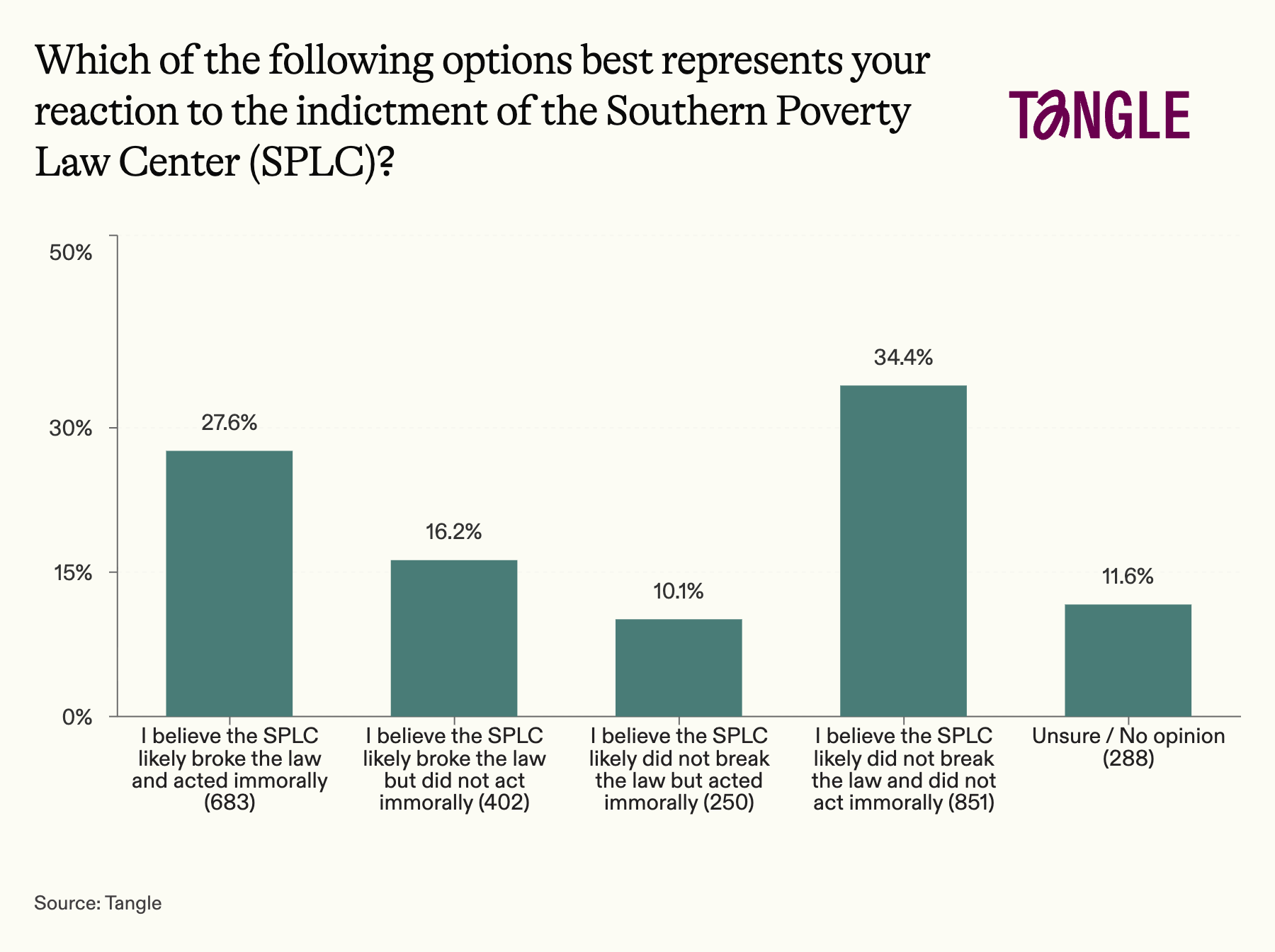
- Our last survey: 2,474 readers responded to our survey on the Southern Poverty Law Center (SPLC) indictment with 34% saying they didn’t think the SPLC broke the law or acted immorally. “Using ‘plants’ in opposing groups is necessary sometimes, but always messy,” one respondent said. “The SPLC is a political activist slandering all opposing it for vulgar motives SPLC embraces. It has discredited itself,” said another.
Have a nice day.
KRAS gene mutations are among the most common genetic drivers of cancer, occurring in approximately 90% of pancreatic cancers and about 40% of colorectal cancers. For years, scientists have struggled to find a way to target the mutations with drugs. Now, a different approach is showing promise: a one-size-fits-all vaccine. The vaccine teaches immune cells to recognize and target cells with KRAS mutations, and unlike other cancer vaccines, it does not need to be personalized to the patient. Results of phase 1 of a trial showed that 85% of participants who received the vaccine had an immune response to KRAS mutations, while nearly 70% had an immune response triggered to other tumor cells that were not in the vaccine. NBC News has the story.